Author: Contentifai

  • Sales Enablement Content That Actually Gets Used: A B2B Guide to Marketing Sales Alignment

    Sales Enablement Content That Actually Gets Used: A B2B Guide to Marketing Sales Alignment

    Sales enablement content bridges the gap between what marketing creates and what sales needs. The divide between these teams is not a myth, and it costs real money. But there is a practical way to close it, starting with content and materials that enable and empower sales.

    Your marketing team creates content. Your sales team ignores it. This pattern repeats in B2B organisations of all sizes, and it is not because anyone is doing their job poorly. The two departments operate with different priorities, different metrics, and often different systems entirely. Marketing focuses on brand visibility and audience reach. Sales focuses on individual conversations and closing deals.

    The unintended result is often content that never reaches the people who could use it most.

    This article explores how sales enablement content bridges that gap. We will cover why most B2B content goes unused, where to start creating materials that empower sales, and how to build a feedback loop that benefits both teams. This connects directly to how we measure content marketing ROI at Contentifai, because content that supports sales creates a clearer path from marketing activity to business outcomes.

    Table of Contents

    Why Does Marketing Sales Alignment Fall Short in B2B Organisations?

    The challenge is familiar to anyone who has worked in either (or both) departments. Marketing measures success through traffic, engagement, and lead volume. Sales measures success through conversations, conversions, and closed deals. These metrics do not always align, and when they conflict, both teams end up frustrated.

    Only 8% of companies have achieved strong alignment between their sales and marketing departments. Often-cited research suggests that 60 to 70% of B2B content created by marketing is never used by sales, typically because the topic does not match what buyers actually ask about (ZoomInfo/Forrester).

    The financial impact of this misalignment is significant. In the US alone, marketing and sales teams waste an estimated $1 trillion annually due to lack of coordination (LinkedIn “Art of Winning” Report).

    This is not about blame. It is about recognising that the content marketing creates and the content sales needs are often two different things. Closing that gap requires a different starting point.

    How Sales Enablement Content Starts with Objection Handling

    If you want to create content that enables sales, start with objections. Every sales team hears the same hesitations repeatedly. Prospects worry about cost, timing, internal buy-in, or whether the solution fits their specific situation. These concerns surface in every call and every email exchange.

    Sales objection content addresses these hesitations directly. Feed this invaluable content into your content marketing engine at strategic places to reinforce the sales team’s points and educate prospects.

    We saw this work with an IT services client. Their outreach team kept encountering the same resistance: prospects felt that outsourced IT would conflict with their internal departments. The perception was that bringing in an external provider meant replacing internal staff.

    We created sales enablement content specifically addressing this concern, explaining how outsourced IT complements internal teams rather than competing with them. The content showed how both could work together, each handling different responsibilities. The result was improved response rates and warmer conversations, because prospects arrived at sales calls already understanding the relationship.

    This approach works because it draws directly from what sales teams encounter daily. Surveys of sales leaders frequently cite poor communication, misaligned goals, and lack of sales input on content as top barriers to alignment, with roughly a quarter specifically pointing to insufficient sales involvement in content planning. Only 35% of sales reps believe marketers understand what content they need. Yet 79% of sales leaders say enablement materials are important when making a sale (G2; Sopro; HubSpot, 2024).

    The practical step is simple: ask your sales team what objections they hear most often, then create content that addresses those objections before prospects ever reach a sales conversation.

    What Should a B2B Sales Content Feedback Loop Include?

    Sales objection content is the starting point, but sustaining marketing sales alignment requires ongoing communication. Sales and marketing have insights the other team needs, and sharing those insights improves outcomes for both.

    What sales can tell marketing

    • ✓ Which objections prospects raise repeatedly
    • ✓ What prospects already know when they arrive at a sales call, and what gaps remain
    • ✓ How ready to buy leads actually are when they reach sales
    • ✓ How well understood the brand is before the first conversation

    What marketing can tell sales

    • ✓ Which content a prospect engaged with before requesting contact
    • ✓ What campaigns are currently running that sales can reference
    • ✓ Which messaging is resonating with the target audience

    This exchange does not require complex systems. It requires regular communication. A monthly check-in where both teams share what they are learning can surface insights that improve content relevance and sales effectiveness.

    Aligned organisations achieve 38% higher sales win rates and up to 208% more revenue from marketing efforts. Yet 53% of companies still have broken hand-offs between marketing and sales, where engaged prospects are not followed up by the sales team (ZoomInfo/MarketingProfs; Influ2, 2025).

    The feedback loop works both ways. Marketing creates better sales enablement content when informed by sales insights. Sales has more productive conversations when they know what marketing touchpoints preceded each prospect.

    Want a closer look at how content strategy connects to AI and brand positioning?

    Download our white paper: Brand Survival in the Age of AI.

    Download the white paper →

    Which Sales Collateral Formats Deliver the Best Results?

    Not all content serves sales equally. Before creating more materials, audit what your sales team currently uses and what they ignore. Then focus on formats with proven utility.

    1. Objection-handling guides

    One-page documents addressing the top three to five prospect concerns. Include clear responses and supporting evidence. Sales can reference these during calls or share them directly with hesitant prospects.

    2. Industry-specific case studies

    Stories demonstrating results for companies similar to the prospect. Generic case studies have limited impact. Industry-specific examples let sales say, “Here is how we helped a company like yours.”

    3. Competitive comparison sheets

    Honest positioning against alternatives. Prospects will compare you to competitors regardless, so give your sales team materials that address “why you over them?” with confidence and clarity.

    4. Pre-meeting content

    Short articles or guides that prospects can read before a sales call. When prospects arrive informed, conversations move faster and focus on specific questions rather than basic explanations.

    The pattern across all four sales collateral formats is the same: content that helps sales have better conversations, not content that exists for its own sake. 76% of content marketers forget about sales enablement when planning their efforts. The organisations that remember it see measurably better results (G2, 2024).

    Frequently Asked Questions about Sales Enablement Content

    Answers to common questions about sales enablement content, marketing sales alignment, and building materials that support your sales team.

    What is sales enablement content?

    Sales enablement content refers to materials created specifically to help sales teams engage prospects and close deals. Examples include objection-handling guides, case studies, competitive comparisons, product one-pagers, and email templates. Unlike brand awareness content, sales enablement content is designed for direct use in sales conversations.

    What causes sales and marketing misalignment in B2B companies?

    The primary causes are different goals, separate measurement systems, and poor communication. Surveys of sales leaders consistently identify poor communication between teams, misaligned goals or strategies, and lack of sales input on marketing content as the biggest barriers to alignment, with insufficient sales involvement in content planning being a particularly common concern.

    What types of sales collateral do B2B sales teams need?

    Sales teams benefit most from content that addresses common objections, demonstrates results for similar companies, positions against competitors, and educates prospects before sales conversations. The most effective formats include objection-handling guides, industry-specific case studies, competitive comparison sheets, and pre-meeting content.

    How do you identify gaps in sales enablement content?

    Start by asking your sales team three questions: What objections do you hear most often? What do prospects already know when they reach you? What information do you wish prospects had before the first call? The answers reveal which sales enablement content would have the most immediate impact.

    How does sales enablement content improve B2B conversion rates?

    When prospects receive relevant content before speaking with sales, they arrive better informed and more aligned with your solution. This reduces friction in sales conversations and addresses hesitations before they become objections. Research shows aligned teams achieve 38% higher sales win rates than misaligned organisations.

    What is sales objection content and why does it matter?

    Sales objection content specifically addresses common concerns prospects raise during the buying process. It matters because these objections are predictable, so content that addresses them pre-emptively makes sales conversations more productive and shortens the path to conversion.

    How can small B2B marketing teams create sales enablement content without dedicated resources?

    Start with monthly sales-marketing check-ins to identify the most common objections. Create one piece of objection-handling content per month. Use a shared document where sales can log feedback on what content works and what gaps remain. Small, consistent efforts compound over time.

    How to Achieve Marketing Sales Alignment Through Content

    Sales enablement content is not a separate category of marketing. It is a mindset shift toward creating materials that serve both brand visibility and sales effectiveness.

    Start with objection content. Build a regular feedback loop between teams. Focus on formats that empower sale. The measure of success is straightforward: does your sales team use the content you create?

    This connects directly to content marketing ROI. When sales enablement content supports the sales process, the attribution path becomes clearer. You can trace how a prospect moved from reading an article to downloading a guide to booking a consultation. The content that influences that journey deserves investment; the content that sits unused does not.

    Learn more about connecting content performance to business outcomes in our guide: Content Marketing ROI: Measuring What Actually Matters for B2B Brands

    Ready to build sales enablement content that empowers sales?

    Let’s discuss how a structured approach can fit into your content marketing strategy.

    Book a consultation →

  • Content Marketing ROI: Measuring What Actually Matters for B2B Brands

    Content Marketing ROI: Measuring What Actually Matters for B2B Brands

    B2B marketers know their content is working but struggle to prove it. The issue is not data scarcity or technology limits. It is a framework problem. This guide introduces a content marketing ROI measurement approach designed for complex B2B sales cycles.

    Your content marketing is generating results. Somewhere in the journey from first website visit to signed contract, your blog posts, guides, and thought leadership pieces are influencing decisions. Traditional measurement approaches were never designed for how B2B buyers actually behave.

    When a prospect reads your article in January, downloads your guide in March, and requests a demo in July, which touchpoint gets the credit? Standard analytics will likely credit the demo request page. Everything else becomes invisible.

    This measurement gap is widespread. Research from the Content Marketing Institute found that 56% of B2B marketers cite difficulty attributing ROI to content efforts, while 44% cannot tie content performance to business goals (CMI, B2B Benchmarks Outlook for 2025). The challenge is not whether content marketing works for B2B brands. It does. The challenge is proving it with confidence.

    We’ve introduced a content marketing ROI framework specifically designed for B2B companies with complex sales cycles. We explore why consumer metrics fail in business contexts, how to align measurement with campaign objectives, and what the rise of AI search means for content attribution in 2026 and beyond.

    Table of Contents

    Why Standard Content Metrics Fail B2B Companies

    The analytics tools most marketers rely on were built for a different world. They assume short decision cycles, individual buyers, and direct paths from click to conversion. B2B reality looks nothing like this.

    Consider the typical enterprise purchase. Multiple stakeholders across departments evaluate options over extended periods. 6sense research indicates the average B2B sales cycle now runs approximately 10 months (6sense, 2025). Each person in the buying committee consumes different content at different stages. The CFO reviews pricing pages while the operations manager watches implementation videos. The technical lead reads documentation while the CEO skims case studies.

    Attribution models that credit a single touchpoint, whether first click or last click, miss most of this activity. They reward what is easy to measure rather than what actually influences decisions.

    This matters because measurement shapes strategy. If your analytics only credit demo requests, you will optimise for demo requests. The brand-building content that creates demand in the first place gets deprioritised. Over time, the pipeline shrinks because the top of the funnel was starved of investment.

    Marketing for marketing’s sake is ritualistic, not principled. “We must publish a blog post today” is not a strategy if you cannot explain what that post should achieve and how you will know if it worked. The question every piece of content must answer: what business outcome does this support, and what will we measure to confirm it?

    A Content Performance Framework for B2B Sales Cycles

    At Contentifai, we structure every client engagement around three campaign types, each with distinct measurement priorities: brand equity, user engagement, and client acquisition. This is not about choosing one objective over another. It is about knowing which objective leads in any given 12-week period while tracking all relevant metrics continuously.

    Measuring Brand Equity Through Content

    Brand equity campaigns focus on visibility and reach. The goal is increasing awareness among your target audience and building recognition that positions you as a credible option when purchase decisions arise.

    Data points we measure during a brand equity campaign:

    • Keyword visibility growth across organic search and AI platforms
    • Organic traffic increases from target demographics and regions
    • AI referral traffic from ChatGPT, Perplexity, and Google AI Overviews
    • Geographic and industry alignment of traffic sources
    • User engagement signals indicating content relevance

    The demographic detail matters more than raw numbers. We worked with one client whose organic traffic looked healthy on paper. Engagement metrics told a different story: visitors were landing on the site but bouncing quickly without taking action.

    Investigation revealed the traffic was coming from the wrong geographic region entirely. A handful of articles had ranked well for search terms that attracted readers outside the client’s service area. These visitors wanted quick answers, not professional services.

    The solution involved updating content with geographic and industry markers that discouraged irrelevant traffic while attracting the right audience. We also revised the website’s schema markup to clarify service regions. Within weeks, traffic from non-target locations dropped significantly. The remaining visitors were more likely to engage because the content now spoke directly to their context.

    This is what brand equity measurement should reveal: not just how many people find you, but whether the right people find you. A smaller, more qualified audience will always outperform a large, disengaged one.

    Content marketing remains highly effective for brand building. CMI’s research confirms that 87% of B2B marketers achieved brand awareness goals through content marketing in the past 12 months (CMI, B2B Benchmarks Outlook for 2025).

    Tracking User Engagement and Content Interaction

    Engagement campaigns aim to deepen relationships with visitors who have already discovered you. The goal is moving prospects from awareness to active interest by providing value that builds trust.

    Data points we measure during user engagement campaigns:

    • Page depth and navigation patterns
    • Downloads of guides, tools, and resources
    • Email list growth from content consumption
    • Return visitor rates
    • Interaction with calls-to-action

    The distinction between traffic and engagement is where many content measurement strategies fail. A thousand visitors who leave immediately provide less value than a hundred who explore multiple pages, download resources, and return the following week.

    One client created a series of free downloadable guides targeting specific pain points in their industry. These resources proved popular, generating consistent downloads and strong engagement metrics. More importantly, each download captured an email address, creating a direct channel for nurturing.

    Engagement content serves acquisition goals indirectly. Visitors who exchange contact details for valuable resources signal genuine interest. They can be nurtured through subsequent touchpoints until the timing aligns with their buying cycle. The guide downloaded today may not produce a lead for six months, but the relationship begins with that first valuable exchange.

    Content-Driven Client Acquisition Metrics

    Acquisition campaigns target direct conversion activities: form submissions, demo requests, consultation bookings, and other actions that signal purchase intent.

    Data points we measure during client acquisition campaigns:

    • Form completions across contact, bookings, and discovery forms
    • High-value downloads such as industry reports and white papers
    • Demo and consultation requests
    • Direct enquiries with traceable attribution
    • Revenue attributed to content touchpoints

    For B2B brands, acquisition rarely happens in a single session. The visitor who submits a contact form today likely encountered your brand weeks or months earlier. Effective content marketing ROI measurement connects that conversion back to the content that initiated and nurtured the relationship.

    We recently documented a case where refreshing website content and implementing an agentic engine optimisation (AEO) strategy produced measurable acquisition results. The client saw a significant increase in direct traffic with patterns consistent with AI-assisted discovery, and new prospects mentioned finding the brand through AI search tools during sales conversations.

    This example illustrates how the three campaign types connect. Brand equity work (appearing in AI search results) enabled engagement (prospects explored the site and downloaded content) which led to acquisition (completed booking forms and conversations with the sales team). The final conversion was attributed to AI-driven discovery, but every stage contributed.

    You can read the full case study here: From Invisible to AI-Recommended: How One B2B Firm Scaled Weekly Users Through Semantic SEO.

    See How This Works in Practice

    Our client case studies demonstrate how this content performance framework applies across different industries and objectives. Each example shows the specific metrics tracked, the challenges addressed, and the business outcomes achieved.

    Multi-Touch Attribution for B2B Content Marketing

    The framework above defines what to measure. Attribution models determine how to assign credit across touchpoints. For B2B brands with extended sales cycles, single-touch attribution dramatically undervalues content’s contribution to revenue.

    Why Last-Click Attribution Fails B2B Content

    Last-click attribution credits whichever page a visitor saw immediately before converting. In B2B contexts, this is usually a pricing page, contact form, or demo request. Every article, guide, and resource that built trust over preceding months receives zero credit.

    This model made sense when analytics tools were primitive and most purchases happened quickly. Neither condition applies to modern B2B content marketing. Buyers now engage with brands across multiple channels and devices over extended periods. Forrester research indicates that 90% of organisations now use generative AI in some aspect of their purchasing process (Forrester, via DigitalCommerce360, 2025). 

    The buyer journey has become more complex, not simpler.

    Multi-Touch Attribution Models for Complex Sales

    Several attribution models distribute credit more realistically across the content marketing funnel:

    Time-decay attribution for closing deals

    Time-decay attribution gives more weight to touchpoints closer to conversion. This works well when later-stage content, such as product comparisons or implementation guides, plays a decisive role in closing deals.

    Position-based (U-shaped) attribution for awareness and conversion

    Position-based attribution assigns most credit to the first and last touchpoints, with remaining credit distributed across the middle. This suits organisations that value both initial awareness and final conversion activities.

    W-shaped attribution adds lead creation

    W-shaped attribution extends the position-based approach to include lead creation as a third key moment. This model fits companies with clear qualification stages where specific content drives prospects from anonymous visitor to known lead to active opportunity.

    The right model depends on your sales cycle and content architecture. What matters most is moving beyond single-touch approaches that hide the full picture of content marketing ROI.

    Our Approach: Focused Measurement, Full Tracking

    Within our framework, each 12-week campaign prioritises one objective while tracking all relevant metrics. A brand equity campaign focuses on visibility and reach, but we continue monitoring engagement and acquisition indicators. This prevents tunnel vision while maintaining strategic focus.

    If acquisition metrics spike during a brand equity campaign, that is valuable information. It might indicate the campaign is performing better than expected, or it might reveal that previous engagement efforts are now producing results. Either way, tracking everything while optimising for one objective gives a clearer view of content performance than tracking only what the current campaign targets.

    How AI Search Changes Content Marketing Measurement

    AI-powered search is changing how B2B buyers discover and evaluate vendors. This shift creates both measurement challenges and strategic opportunities for content marketing ROI.

    AI Search Traffic: Current Scale and Growth

    Conductor’s 2026 AEO/GEO Benchmarks Report found that AI referral traffic now accounts for approximately 1% of total website visits across industries, with ChatGPT driving 87.4% of all AI referrals (Conductor, 2026). That percentage sounds small until you examine growth rates and conversion quality.

    Forrester reports that AI-generated traffic represents between 2% and 6% of B2B organic traffic specifically, and this share is growing at more than 40% per month. B2B buyers are adopting AI-powered search at three times the rate of consumers (Forrester, via DigitalCommerce360, 2025).

    The quality of AI-referred traffic is particularly notable for content marketing measurement. Microsoft Clarity’s analysis of publisher and news websites found that visitors from LLMs converted to sign-ups at 1.66%, compared to 0.15% from traditional search (Microsoft Clarity, 2025). Ahrefs reported that AI search visitors to their site convert at 23 times the rate of traditional search visitors, with just 0.5% of traffic driving 12.1% of signups (Ahrefs, 2025).

    These conversion advantages likely reflect the nature of AI search behaviour. Users who click through from ChatGPT or Perplexity have often already received contextual information about the destination. They arrive with clearer intent than someone scanning a list of search results.

    Zero-Click Search and the Attribution Gap

    AI search creates measurement blind spots that traditional analytics cannot capture. SparkToro’s 2024 study found that 58.5% of US Google searches and 59.7% of EU searches end without a click (SparkToro, 2024). Users often end their session or refine their query without clicking through to other sites.

    For B2B brands, this creates what we call attribution dark matter: influence that drives eventual conversions but leaves no trackable footprint in your content marketing analytics. A prospect might ask ChatGPT to recommend accounting software for mid-sized law firms. The AI cites your brand among the options. The prospect later visits your site directly, perhaps weeks later, and your analytics show a direct visit with no referral source.

    This is why we build AI referral tracking into every client engagement. Google Analytics can segment visitors arriving from openai.com, perplexity.ai, and similar domains. Combined with monitoring AI citations through tools designed for AEO, you gain visibility into a channel that most competitors ignore entirely.

    Implications for Your Content Measurement Framework

    AI search does not invalidate traditional content performance metrics. Organic search remains the primary traffic driver for most B2B websites. Any measurement framework built today must account for AI discovery alongside established channels.

    Practical steps include AI discovery measurement:

    • Creating custom channel groups in your analytics to separate AI referral traffic
    • Tracking AI citations for your brand and key content
    • Monitoring branded search volume as a proxy for AI-influenced awareness
    • Adjusting attribution windows to account for longer discovery-to-conversion paths

    The brands that measure AI influence now will have competitive advantages as this channel continues to grow.

    Want to see how structured measurement connects to content strategy?

    Our white paper, Brand Survival in the Age of AI, explores building resilient content strategies for B2B brands navigating these shifts.

    Download the white paper →

    Structured Content Campaigns: The 12-Week Approach

    Measurement without structure produces data without insight. We organise every client engagement into 12-week content campaigns with defined objectives, baseline measurements, and clear success criteria.

    Why 12-Week Content Campaigns Work

    Twelve weeks provides sufficient time for meaningful data collection without delaying strategic adjustments indefinitely. It aligns with quarterly business planning cycles, making it easier to connect content marketing activity to broader organisational goals.

    Shorter cycles risk optimising for noise rather than signal. Content needs time to rank, generate traffic, and influence behaviour. A four-week measurement window might show a blog post underperforming when it simply has not had time to find its audience.

    Longer cycles risk strategic drift. Markets change. Competitors act. What worked six months ago may need refinement. Quarterly reviews create natural moments to evaluate content performance and adjust direction.

    The 12-Week Campaign Structure in Practice

    Each 12-week content campaign follows a consistent pattern:

    Week 1-2: Baseline and planning

    We establish current performance across all relevant content metrics, confirm primary objectives, and finalise the content calendar. This baseline makes later performance assessment meaningful.

    Weeks 2-11: Execution and monitoring

    Content publishes according to plan. We track metrics weekly, looking for early indicators of success or necessary adjustments. Small optimisations happen continuously; major pivots wait for the formal review.

    Week 11-12: Analysis and handoff

    We compile performance data, compare against objectives and baselines, and generate recommendations for the next campaign phase. This is where content measurement produces strategy.

    The discipline matters as much as the structure. Every piece of content must justify its existence before publication. If we cannot explain what a post should achieve and how we will measure success, it does not get written. This prevents the content treadmill where teams publish constantly without knowing why.

    How to Implement Content Marketing ROI Tracking

    Implementing structured content measurement does not require enterprise-grade technology or dedicated analytics teams. It requires clarity about objectives and discipline in tracking.

    Step 1: Audit Current Measurement

    Begin by documenting what you currently track and how. Most organisations measure more than they realise, but the data sits in disconnected tools. Google Analytics captures traffic. Email platforms track opens and clicks. CRM systems record lead sources. The value emerges when these sources connect.

    Ask: Which of our current content metrics link to business outcomes? Where are the gaps? What are we measuring that does not matter?

    Step 2: Define Campaign Objectives

    Select a primary objective for the next 12 weeks. If brand awareness is your biggest gap, focus on brand equity metrics while tracking engagement and acquisition as secondary indicators. If your sales team needs qualified leads now, prioritise acquisition while monitoring how brand content supports that goal.

    The objective should be specific enough to measure: increase organic traffic from target industries by 20%, grow email subscribers by 500, generate 10 qualified consultation requests. Vague objectives produce vague content measurement.

    Step 3: Implement Tracking

    Ensure your analytics can capture the data your objectives require:

    • Google Search Console for organic visibility trends
    • Website analytics for traffic, engagement, and conversions
    • AI referral tracking through custom channel groups
    • CRM integration for lead attribution
    • Email platform metrics for engagement campaigns

    Start with what you have. Sophisticated attribution tools add value later, but basic tracking implemented consistently beats advanced tools used sporadically.

    Step 4: Establish Reporting Rhythm

    Weekly pulse checks identify emerging trends and potential issues. Monthly reviews assess progress against objectives. Quarterly strategic reviews evaluate overall framework effectiveness and set direction for the next campaign.

    The rhythm prevents both neglect and obsession. Checking content metrics daily invites overreaction to normal variation. Checking quarterly means problems go unaddressed for months. Weekly monitoring with monthly synthesis balances responsiveness and perspective.

    Step 5: Iterate Based on Evidence

    Measurement produces value when it informs decisions. Each campaign review should generate specific actions: content types to emphasise or reduce, channels to invest in or deprioritise, audiences to target more precisely.

    If the data does not change your strategy, either your strategy was already optimal or your content measurement is not asking the right questions. Both scenarios warrant examination.

    Five Content Measurement Mistakes That Hurt ROI

    Even with a sound framework, certain pitfalls recur across B2B content marketing measurement.

    Measuring activity rather than outcomes

    Publishing frequency, word counts, and social shares feel productive but reveal nothing about business impact. Track these as process metrics if useful, but never confuse them with success metrics.

    Applying consumer benchmarks to B2B contexts

    A 2% conversion rate might be excellent for B2B or disastrous for e-commerce. Industry and sales cycle matter more than generic standards. Build benchmarks from your own content performance over time.

    Ignoring the middle of the funnel

    First-touch and last-touch attribution both neglect the content that nurtures prospects between initial discovery and final conversion. This middle content often represents your largest investment; ensure it receives measurement attention.

    Treating all content identically

    A cornerstone guide and a quick tactical post serve different purposes and should be measured differently. Define success criteria appropriate to content type and campaign objective.

    Forgetting AI search in attribution

    Traffic arriving after AI-assisted research may appear as direct visits or branded searches. Without specific AI referral tracking, you undercount a growing influence channel.

    Frequently Asked Questions about Content Marketing ROI

    These questions address the most common challenges B2B marketers face when measuring and proving content marketing ROI and effectiveness.

    How do you calculate content marketing ROI?

    The basic formula is straightforward: (Revenue from content minus Cost of content) divided by Cost of content, multiplied by 100. The challenge lies in accurately attributing revenue to content. For B2B brands with extended sales cycles, this requires multi-touch attribution that tracks how content influences deals across months, not just the final conversion touchpoint. Start by connecting your CRM to your analytics platform so closed deals can be traced back through the marketing touchpoints that preceded them.

    What content performance metrics should B2B companies track?

    Metrics should align with your campaign objectives. For brand equity: keyword rankings, organic traffic growth, AI referral traffic, and demographic fit of visitors. For engagement: page depth, resource downloads, email sign-ups, and return visitor rates. For acquisition: form completions, demo requests, and revenue attributed to content. Track all categories continuously, but optimise for one primary objective per campaign.

    Why is measuring content marketing ROI so difficult?

    B2B content influences buyers across sales cycles that can span many months, involving multiple stakeholders. Traditional analytics credit single touchpoints, missing the blog posts, guides, and case studies that built trust throughout the journey. Additionally, AI-assisted research creates attribution blind spots where influence cannot be directly tracked. Structured frameworks and multi-touch attribution address these challenges.

    How does AI search affect content marketing ROI measurement?

    AI search creates attribution gaps where prospects research via ChatGPT or Perplexity before visiting your site. Your analytics may show a direct visit when an AI platform actually drove the discovery. AI referral traffic currently represents a small but rapidly growing share of B2B visits, with significantly higher conversion rates than traditional channels. Track AI referrals separately in your analytics and monitor your brand’s appearance in AI-generated answers.

    What is a good content marketing ROI benchmark?

    Benchmarks vary significantly by industry, sales cycle length, and campaign type. Meaningful benchmarks come from your own historical performance rather than generic standards. Brand equity campaigns may show indirect returns over 12 or more months, while acquisition campaigns should demonstrate clearer short-term attribution. Focus on improvement over your baseline rather than matching external numbers.

    How long before content marketing shows ROI?

    For B2B brands, expect several months before content shows meaningful ROI. SEO content typically needs time to rank and generate consistent traffic, with timelines varying widely based on competition, domain authority, and content quality. Our 12-week campaign structure provides measurement milestones within this longer horizon, allowing you to track leading indicators while building toward full results.

    What is multi-touch attribution for content marketing?

    Multi-touch attribution distributes credit across all touchpoints that influence a conversion, rather than crediting only the first or last interaction. B2B content marketing needs it because purchase decisions involve multiple stakeholders consuming multiple pieces of content over extended periods. Single-touch models drastically undervalue content’s role in complex sales. Common multi-touch models include time-decay, position-based, and W-shaped approaches.

    How do you track AI referral traffic in Google Analytics?

    In Google Analytics 4, create custom channel groups that identify visits from AI platforms. Filter referral sources containing domains like openai.com, perplexity.ai, anthropic.com, and similar AI providers. This segments AI-driven traffic for separate analysis. Additionally, consider monitoring tools that track when and how AI platforms cite your content in their responses.

    Should B2B content marketing focus on brand awareness or lead generation?

    Both, but not simultaneously as primary objectives. Our three-part framework separates brand equity, user engagement, and client acquisition campaigns. Each 12-week campaign focuses on one primary objective while tracking all metrics. This prevents the “measure everything, optimise nothing” trap while ensuring no important indicators are ignored.

    What is the difference between content metrics and business outcomes?

    Content metrics track content performance: pageviews, time on page, downloads, shares. Business outcomes track commercial results: leads generated, pipeline created, revenue attributed, customer acquisition cost. The gap between them is where most B2B content measurement fails. Effective frameworks connect content metrics to business outcomes through clear attribution paths, showing how page performance translates to commercial results.

    From Data Chaos to Strategic Clarity

    Content marketing ROI is measurable with the right framework. Most B2B organisations track plenty of metrics without connecting them to business outcomes or using them to guide strategy.

    The three-part framework we have outlined, brand equity, user engagement, and client acquisition, provides that connection. By aligning measurement with campaign objectives, distinguishing between activity and outcomes, and accounting for how AI search is changing buyer behaviour, you gain clarity that generic analytics cannot provide.

    Twelve-week campaign structures add discipline to content measurement. Defined objectives, baseline comparisons, and regular reviews prevent the drift that turns content marketing into content publishing without purpose.

    The organisations that prove content marketing ROI will earn continued investment. Those that cannot will see budgets scrutinised and eventually cut. The framework is available. The data exists. The question is whether you implement the structure to make sense of it.

    Ready to move from content activity to content strategy?

    We help B2B brands build content measurement frameworks that connect marketing effort to business outcomes. Let’s discuss how structured content campaigns could work for your organisation.

    Book a consultation →

  • Enterprise Content Marketing at Scale: How We Built Brand Authority for a Global Leader

    Enterprise Content Marketing at Scale: How We Built Brand Authority for a Global Leader

    A global professional services firm, the second largest in their sector worldwide, needed content that matched their market position. Here is how we delivered enterprise content marketing that cut through complexity and built genuine authority.

    Large organisations often assume their size is an advantage for content marketing: more budget, more people, and more expertise to draw from. In practice, size creates distinct obstacles: competing priorities across departments, multiple approvers for every piece, and subject matter experts who are too busy to contribute.

    These challenges are not unique to any single company. Research highlights that 61% of enterprise marketers cite communicating across organisational silos as their top non-creation challenge. Only 28% rate their content strategy as very or extremely effective (CMI, 2025).

    This enterprise case study examines how we delivered content marketing for a leading professional services organisation. It offers lessons for any B2B brand wrestling with content at scale.

    Table of Contents

    Why Enterprise B2B Content Fails Without the Right Process

    Our client had the raw materials for exceptional thought leadership: proprietary research, deep technical expertise, and a clear market position. What they lacked was a way to bring these elements together into content that would resonate with their target audiences.

    The working environment reflected the realities of global enterprise. Multiple internal marketing teams, external contractors, and subject matter experts across regions all needed coordination. Brand governance requirements meant every piece required careful review. The executives whose insights would make the content distinctive were, understandably, busy running the business.

    This is a common pattern. Over 40% of B2B deals stall due to internal misalignment within buying groups. The same principle applies to content programmes: without alignment, even well-resourced teams struggle to produce consistent, high-quality output (Edelman/LinkedIn, 2025).

    How We Extract Thought Leadership from Subject Matter Experts

    Our approach centred on what we call “expert extraction”, a process for capturing deep expertise from busy professionals without overwhelming their schedules.

    We began by understanding the organisation’s proprietary research, their strategic positioning, and the specific audiences they needed to reach. Rather than asking subject matter experts to write, we conducted structured briefings that allowed us to capture their insights efficiently. We reviewed existing materials, conducted focused interviews, and developed iterative drafts that required only light feedback.

    The goal was maximum insight with minimal disruption. This matters because the value of enterprise thought leadership lies in its authenticity. Generic content that could come from anyone offers no competitive advantage. Content grounded in genuine expertise and original research is what earns attention and trust.

    Indeed, 71% of hidden decision-makers (the internal influencers who shape purchasing decisions) and 65% of target decision-makers say an organisation’s thought leadership is more trustworthy than marketing materials when assessing its capabilities. For hidden buyers specifically, 95% say strong thought leadership makes them more receptive to sales outreach (Edelman/LinkedIn, 2025).

    Building Authority Through Content?

    Download our white paper:

    Brand Survival in the Age of AI

    A Content Scaling Strategy That Works Across Silos

    Enterprise content marketing is as much about process as it is about creativity. Without clear workflows for stakeholder input, approval bottlenecks stall even the best campaigns.

    We established briefing and feedback cycles that respected the organisation’s governance requirements while maintaining momentum. Content grounded in existing proprietary research required fewer revisions because it reflected what the organisation already knew to be true. Relationships with key subject matter experts, built over time, created a pipeline for ongoing insights rather than one-off contributions.

    This operational focus is often overlooked. Agencies pitch creative concepts; clients want to know how the work will actually get done. For enterprise organisations, the “how” matters as much as the “what”. A brilliant content idea that takes six months to approve is less valuable than good content that ships consistently.

    Enterprise Marketing Results That Reached Decision-Makers

    The content we produced, articles, landing pages, PDFs, and other materials, was highly received across the organisation. Engagement on third-party PR platforms exceeded expectations, securing the client as a thought leader in their sector.

    What mattered most was demonstrating that external partners can handle the complexity of enterprise environments. Multiple stakeholders, subject matter experts, internal marketing teams, and external contractors all worked together to produce content that met brand standards while offering genuine insight.

    Success in enterprise content marketing is measured not just in traffic or leads, but in internal adoption, stakeholder satisfaction, and external recognition. When busy executives share content with their networks, when sales teams use thought leadership in conversations with prospects, and when industry publications take notice, those are the signals that a content programme is working.

    What Every Enterprise Content Marketing Strategy Needs

    Working with this global organisation reinforced several principles that apply to any enterprise or ambitious B2B content programme:

    Start with what makes you distinctive

    Proprietary research and unique expertise are content gold. The organisations that produce the most compelling thought leadership are those willing to share genuine insights rather than recycled industry commentary.

    Build processes that respect busy experts

    Subject matter experts will contribute if the process is frictionless. Structure your workflows to capture their insights efficiently, then handle the writing and production without requiring extensive time from them.

    Quality compounds over time

    Consistent, thoughtful content builds authority gradually. Volume alone does not earn trust; relevance and depth do. Initial traction typically appears within three to six months, with compound authority building over six to twelve months of sustained effort.

    External partners add capacity and perspective

    Fresh eyes help distil complex ideas into accessible narratives. For organisations where internal teams are stretched across competing priorities, external support provides both bandwidth and objectivity.

    Our human-first approach, with AI tools supporting rather than replacing skilled writers, allows us to deliver this consistency at scale without the headcount expansion that enterprise content programmes traditionally require.

    Frequently Asked Questions about Enterprise Content Marketing

    Do you have questions about enterprise content marketing? Here are answers to the queries we hear most often from marketing leaders at larger organisations.

    What is enterprise content marketing and how does it differ from B2B content marketing?

    Enterprise content marketing addresses the specific challenges of large organisations: multiple stakeholder approvals, siloed departments, brand governance requirements, and coordination of subject matter experts across regions. While standard B2B content marketing focuses primarily on quality and relevance, enterprise programmes must also build processes that manage organisational complexity while maintaining consistency.

    How do you create thought leadership content with busy subject matter experts?

    We use a structured briefing process that minimises time demands on SMEs while capturing their expertise. This includes recorded interviews, existing materials review, and iterative drafts that require only light feedback. The goal is maximum insight with minimal disruption. Research shows that 91% of decision-makers say quality thought leadership helps them better understand challenges they face (Edelman/LinkedIn, 2025).

    What results should an enterprise marketing strategy deliver through content?

    Effective enterprise content marketing typically delivers improved brand authority, increased engagement from target audiences, stronger positioning in industry conversations, and content that supports sales conversations. Research shows that 71% of hidden decision-makers trust thought leadership more than traditional marketing materials when assessing a potential partner’s capabilities (Edelman/LinkedIn, 2025).

    How long before enterprise content marketing shows measurable results?

    Initial traction, including improved engagement and early authority signals, typically appears within three to six months of consistent output. Compound authority, where content begins generating inbound interest and supporting sales conversations, builds over six to twelve months. The organisations that commit to sustained effort gain compounding returns.

    Does enterprise SEO work alongside content marketing?

    Yes. Content and enterprise SEO work together to build visibility. We align content with search behaviour and AI Engine Optimisation (AEO) to build both current discoverability and future-proof visibility as search patterns continue to shift toward AI-assisted discovery.

    Ready to discuss your enterprise content marketing needs?

    Book a consultation

    Contentifai delivers strategic content marketing for B2B organisations. Our human+AI approach combines skilled writers with AI-enhanced workflows to produce thought leadership content at scale.

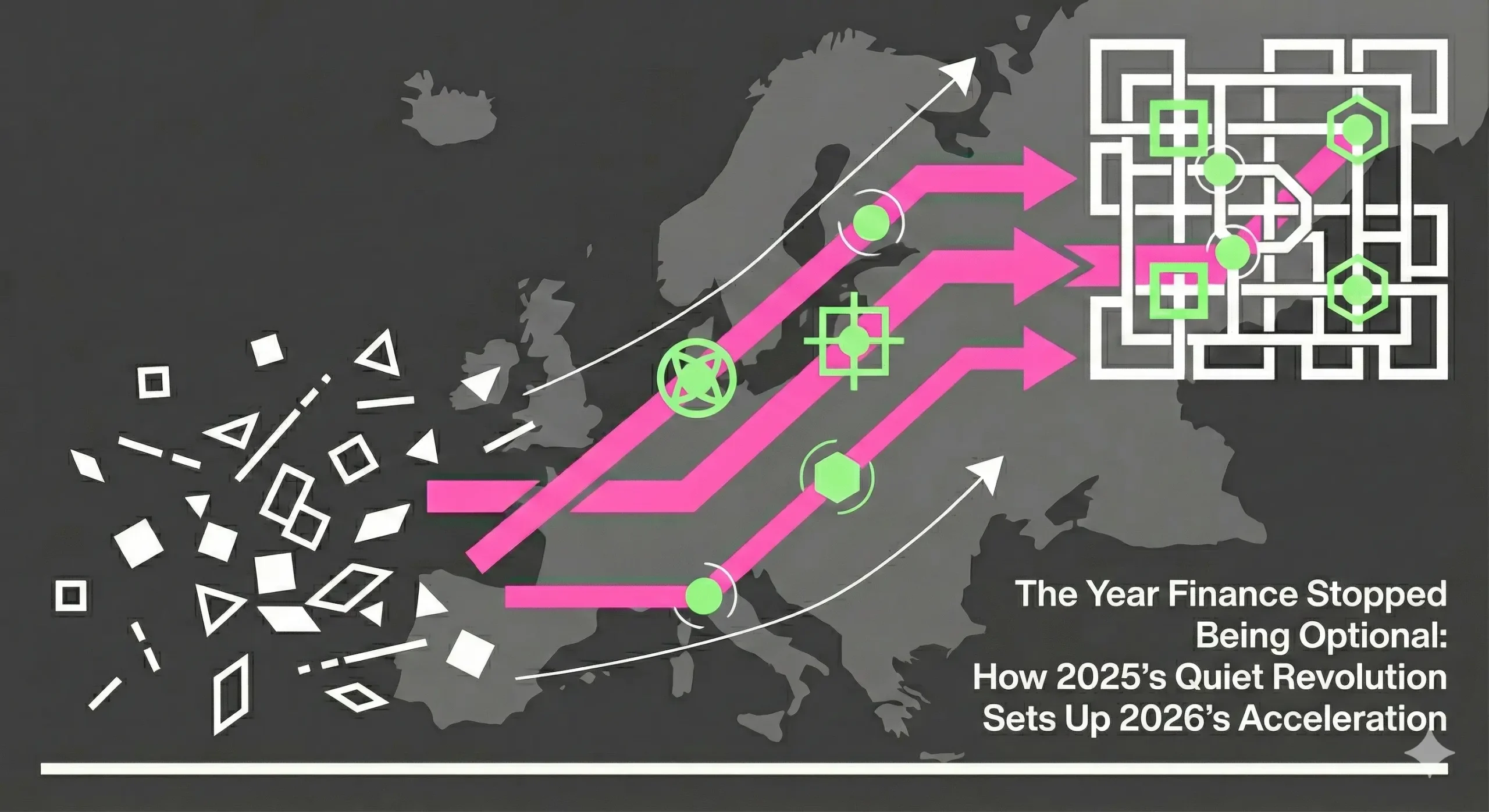
  • The Year Finance Stopped Being Optional: How 2025’s Quiet Revolution Sets Up 2026’s Acceleration

    The Year Finance Stopped Being Optional: How 2025’s Quiet Revolution Sets Up 2026’s Acceleration

    From regulatory breakthroughs to instant payments everywhere, 2025 delivered the infrastructure that makes 2026’s predicted innovations inevitable

    Consider a typical cross-border euro transfer; On January 1st, 2025, sending €1,000 from Berlin to Barcelona took three days and cost €35. Today, it takes 10 seconds and costs nothing. A year ago, operating crypto services in Europe meant navigating 27 different regulatory regimes. MiCA is creating a single passportable licence across the EU, with the regime fully biting from 2026. Twelve months ago, AI in banking was mostly chatbots. Today, 93% of Lloyds Banking Group’s staff who use AI save 46 minutes daily using Microsoft Copilot (Lloyds Banking Group, 2025).

    These aren’t isolated victories. They’re coordinates on a map showing where finance is heading.

    This article was originally published in FinanceX Magazine’s “2025: Wrap Up Edition” Edition #18 (December 2025), exploring a special wrap-up of 2025 with a clear outlook on what’s coming in 2026 for finance and fintech. We’re grateful for the opportunity to share what happens when AI agents gain spending power and demand new liability, trust, and discovery models.

    Table of Contents

    2025: The Year Finance Infrastructure Upgraded

    2025 marked fintech’s graduation from startup disruption to essential infrastructure. Two achievements stand out for reshaping the entire European financial system.

    First, Europe’s regulatory framework finally caught up with innovation. The Markets in Crypto-Assets Regulation (MiCA) key CASP provisions start applying on 30 December 2024, and within eight months, 54 crypto-asset service provider authorisations were processed across 11 EU jurisdictions (European Banking Authority, 2025). Meanwhile, the EU AI Act’s first legally binding obligations came into force on February 2, 2025, with high-risk AI requirements following on August 2, 2026 (DLA Piper, 2025). The first obligations: bans on prohibited AI uses and AI literacy rules, apply from 2 February 2025, GPAI rules from 2 August 2025, and most high-risk AI obligations from 2 August 2026, with some product-linked cases extended to 2027. For compliance teams across Europe, guesswork gave way to clear rulebooks.

    Second, instant payments became the new normal. On October 9, 2025, the EU’s Instant Payments Regulation mandated that all euro-area payment service providers that offer regular euro credit transfers, offering standard credit transfers, must provide SEPA Instant payments priced no higher than standard credit transfers. This created a 10-second settlement, available 24/7/365, with mandatory payee verification to prevent fraud (European Central Bank, 2025). 

    Real-time payment isn’t a premium feature anymore; it’s the baseline expectation.

    The Mainstreaming Moment for Embedded Finance

    What seemed experimental in January 2025 became operational necessity by December. 

    Embedded finance exploded to a market size between $112 and $148 billion in 2025, with projections showing 12% to 31% compound annual growth through 2033 (HSBC Innovation Banking, 2025). Banking disappeared into the platforms where people already spend their time. Your morning coffee app became your payment provider. Your accounting software became your lender. Financial services stopped being a destination and became invisible infrastructure.

    AI transformation accelerated beyond projections. By January 2025, 54% of financial services firms had deployed AI initiatives, up from 40% a year earlier (S&P Global, 2025). Global AI spending in financial services reached $35 billion in 2024, up from $28 billion in 2023, with the AI fintech market projected to hit $79.4 billion by 2030 (Fintech Futures, 2025).

    At Lloyds Banking Group, 30,000 colleagues now use Microsoft 365 Copilot; 93% of them are regular users, with early analysis showing average time savings of around 46 minutes per day. The bank reports genuine productivity gains, not pilot programme promises (Lloyds Banking Group, 2025). The conversation shifted from “should we use AI?” to “how do we govern it?”

    Finance Initiatives That Actually Delivered in 2025

    Cutting through 2025’s hype reveals what created lasting value.

    Biometric authentication reached mainstream adoption with the market hitting $46.38 billion and over 2 billion biometric payment transactions projected globally. Crucially, 83% of consumers now perceive biometric payments as safer than traditional PINs or passwords (Juniper Research, 2025). 

    Security and convenience finally aligned.

    Tokenisation moved from crypto speculation to serious infrastructure. Recent reports estimate today’s tokenised real-world asset market at roughly $0.5-0.6 trillion in notional value, with Standard Chartered forecasting $2 trillion by 2028 (Standard Chartered, 2025). The UK Treasury advanced its Digital Gilt Instrument pilot, aiming to deliver the first government bond on blockchain via distributed ledger technology (HM Treasury, 2025).

    Even the funding environment showed maturity. While H1 2025 saw the lowest global fintech funding since H1 2020 at $44.7 billion, AI-related fintechs attracted $7.2 billion, nearly matching all of 2024 in just six months (KPMG, 2025). Less froth, more focused infrastructure investment.

    2026: The Year The Financial Acceleration Begins

    The financial foundations laid in 2025 make for some highly promising predictions for 2026 and where financial innovation in Europe will go next.

    Implementation Becomes Everything

    The regulatory framework switches from adoption to enforcement. MiCA’s an 18-month transitional period runs into mid-2026, with some NCAs choosing shorter windows, meaning no licence equals no business by 2026 (Norton Rose Fulbright, 2025). The AI Act’s high-risk system obligations hit in August 2026, forcing every bank to map and remediate their AI deployments (European Banking Authority, 2025). Financial institutions won’t debate whether to comply; they’ll compete on how well they implement.

    AI Becomes the Control Environment

    Gartner forecasts 90% of finance functions will deploy at least one AI-enabled technology by 2026, while over 80% of enterprises will have GenAI APIs in production, up from less than 5% in 2023 (Gartner, 2025). AI stops being a productivity tool and becomes part of the risk framework itself. Supervisors will treat AI as a systemic theme, not an innovation curiosity.

    Tokenisation Gets Serious

    The European Central Bank expects digital euro pilot exercises could begin in 2027 if legislation passes during 2026 (European Central Bank, 2025). Combined with advancing wholesale CBDC trials and tokenised market infrastructure, every institution faces a strategic choice: experiment now or scramble to catch up later. This isn’t about cryptocurrency speculation anymore; it’s about the fundamental redesign of market infrastructure.

    Cross-Border Goes Instant

    Project Nexus, linking instant payment systems across continents, expands beyond its initial Asian cluster. With instant payments now standard within Europe, competition shifts to cross-border corridors and who controls the interface. The battle won’t be about speed or price, already commoditised, but about data ownership and customer relationships.

    The Preparation Imperative

    Three actions separate 2026’s leaders from its followers:

    1. Build implementation roadmaps now. Compliance deadlines are fixed. Systems integration takes longer than expected. Start yesterday.
    2. Establish AI governance before regulators force it. Model risk management, bias detection, and explainability aren’t optional extras anymore.
    3. Run tokenisation experiments. Even small pilots provide learning that money can’t buy later. The question isn’t if you’ll need this capability, but when.

    Laying the Groundwork for a European Finance Renaissance?

    In 2025, finance finally delivered on decades of digital promises. Real-time payments work. AI delivers measurable productivity. Regulatory clarity exists. Tokenisation shows genuine utility beyond speculation.

    In 2026, the question isn’t whether you’ll adopt these technologies. It’s whether you’ll lead with them or scramble to keep up with competitors who started preparing today.

    The infrastructure is built. The rules are written. The only variable left is execution.

    What will you choose, and who will you be, when the acceleration hits?


    Translating Complexity into Engaging Narrative Arcs

    At Contentifai, we translate complex fintech innovation into narratives that resonate with sophisticated audiences. We articulate not just what you’re building, but why it matters. Our human+AI content approach helps financial services companies navigate the shift from experimental technology to essential infrastructure. Whether you’re implementing new regulatory frameworks or building tomorrow’s financial systems, we help you tell the story of transformation.

    Contact us to learn how we can help you share your expertise and inspire your users.

  • When Your AI Orders Coffee: Why Agentic Payments Are Finance’s Most Thrilling Yet Terrifying Frontier

    When Your AI Orders Coffee: Why Agentic Payments Are Finance’s Most Thrilling Yet Terrifying Frontier

    The age of autonomous commerce has arrived: your AI agent is now making payments and purchases without your direct command. From India’s national pilot integrating UPI with ChatGPT to the regulatory confusion in Europe, this shift to agentic payments is triggering a multi-trillion dollar disruption, forcing global finance to urgently address liability, fraud, and the existential threat to core business models.

    Your phone pings at 8:47 on Tuesday morning. “Running late. Ordered your flat white from Costa on Church Street instead of Pret. Queue’s shorter. Ready when you arrive. Charged to Mastercard ending 4782.”

    You didn’t open an app. You didn’t tap anything. You didn’t even ask. Your AI agent simply knew. And paid.

    This isn’t speculation. As of this morning, it’s reality. India launched the world’s first national pilot integrating its UPI network directly into ChatGPT. Meanwhile, Europe’s financial institutions face a question nobody asked five years ago: What happens when your AI has spending power?

    This article was originally published in FinanceX Magazine’s “Payments Edition” Edition #17 (November 2025), exploring insights on payments and the innovations transforming how money moves globally. We’re grateful for the opportunity to share what happens when AI agents gain spending power and demand new liability, trust, and discovery models.

    Table of Contents

    From AI Conversation to Agentic Payments

    Think about how you pay for things now. Even the slickest mobile checkout requires you to click “buy”. Agentic payments flip that entirely. Your AI shops, pays, and confirms everything before you’ve thought about opening an app. As Javelin Strategy & Research puts it, we’re moving “beyond card-not-present to person-not-present” (Visa, 2025). The AI agent becomes the buyer.

    The race to build this infrastructure is already on.

    Organisations Racing to Build Agentic Payments Infrastructure

    Mastercard Agent Pay launched in April 2025, partnering with Microsoft, Stripe, and Google. Their example: a woman planning her 30th birthday party chats with an AI about outfit ideas. The AI curates selections from multiple retailers, checks the weather forecast, and completes purchases across merchants. No apps. No checkout pages (Mastercard, 2025).

    Google’s AP2 Protocol brings together over 60 organizations including American Express, PayPal, and Coinbase. It creates cryptographically signed “intent mandates” providing proof you authorised each transaction (Lexology, 2025).

    Visa Intelligent Commerce uses tokenised credentials with spending controls and authentication. Jack Forestell, Visa’s Chief Product Officer, frames the challenge: “These agents will need to be trusted with payments, not only by users, but by banks and sellers as well” (Visa, 2025).

    Boston Consulting Group identifies agentic AI as one of five structural forces reshaping global payments, which BCG projects will reach $2.4 trillion by 2029 (BCG, 2025). This is the future of how money moves.

    India’s Live Agentic Payments Experiment

    This morning’s announcement represents payments’ biggest shift since contactless. India’s National Payments Corporation (NPCI), Razorpay, and OpenAI launched agentic payments on ChatGPT, with BigBasket as the first merchant (Reuters, 2025).

    You tell ChatGPT: “Help me order ingredients for a Thai-style vegetable curry for four people from BigBasket.” The AI checks catalogues, presents options, and completes the purchase via India’s UPI network. Everything happens inside the chat window (Business Standard, 2025).

    And the scale is staggering. UPI processes over 20 billion transactions monthly (Economic Times, 2025). Unlike Europe, where payments fragment across multiple rails, India runs on a single government-backed infrastructure.

    The stated goal is evaluating “how UPI can enable AI agents with payment credentials to autonomously complete transactions on behalf of users in a safe, secure, and user-controlled manner” (Business Standard, 2025). Notice that word: autonomously. Your AI isn’t asking permission for every click.

    India isn’t experimenting in a vacuum. It’s ChatGPT’s second-largest market. OpenAI recently launched ChatGPT Go at ₹399 ($4.57) monthly with UPI support, removing barriers for millions who lack credit cards (TechCrunch, 2025).

    Europe’s AI and Finance Regulatory Maze

    Europe won’t find replicating India’s approach straightforward. The reasons go deeper than different payment infrastructures.

    European payments fragment across Visa, Mastercard, SEPA, national schemes, and open banking APIs. Then add currency complications between eurozone and non-euro countries. But the real barriers are regulatory.

    As law firm Linklaters observes: “Existing UK payments regulation and our current payment infrastructure are designed for human-initiated transactions” (Linklaters, 2025). Everything breaks when AI becomes the buyer.

    PSD2’s Strong Customer Authentication assumes a human verifies each transaction. How does that work when your AI agent buys something while you’re in a meeting? PSD3, currently under debate, must clarify whether AI agents can satisfy authorisation requirements (Linklaters, 2025).

    GDPR creates further complications. Agentic AI continuously learns and adapts, potentially violating purpose limitation principles. When AI makes emergent decisions, explaining them under transparency requirements becomes genuinely difficult. Data minimisation clashes with AI’s need for real-time information (Kennedy’s Law, 2025).

    The EU AI Act adds another layer. Agentic payment systems likely qualify as high-risk AI, triggering strict requirements: Article 12 demands record-keeping, Article 13 requires transparency, Article 14 mandates “effective human oversight” (CMS Law Now, 2025). Article 5 prohibits AI that manipulates behaviour or exploits vulnerabilities. Where’s the line between “helpfully suggesting you reorder coffee beans” and “manipulating behaviour”?

    The liability question towers over everything. When an AI agent errs, who’s responsible? The user? The developer? The payment provider? The protocol? Linklaters puts it plainly: “The use of an AI agent within the contracting process raises questions as to the valid formation of these contracts” (Linklaters, 2025).

    These aren’t theoretical puzzles. They’re immediate barriers preventing European deployment at India’s scale.

    The Agentic Payments Business Model Earthquake

    McKinsey’s analysts understand what’s actually at stake: two core revenue engines for traditional financial institutions face existential threats (McKinsey, 2025).

    Two Traditional Financial Instruments Threatened by Autonomous Commerce

    Credit cards work because of inertia. You get a card, maybe earn some points, stick with it. You’re not constantly calculating optimal rewards. AI agents will be. They’ll automatically route each purchase to whichever card offers the best terms in that moment. In North America, where interchange fees range from 1.30% to 3.25%, the arbitrage opportunity becomes massive (McKinsey, 2025).

    As open banking expands, AI agents can bypass card networks entirely through account-to-account payments. Why pay interchange when direct bank transfers work?

    Deposit accounts face similar pressure. Banks globally derive roughly 30% of retail profit from net interest income (McKinsey, 2025). That works because consumers don’t obsess over interest rates. AI agents will obsess. They’ll automatically move money to highest-yield accounts, updated daily.

    New winners emerge. Digital wallet platforms positioned as “AI agent conduits” gain advantages. Payment orchestration platforms controlling routing decisions capture value. The platform question remains open: Who will “own the agent”? AI companies? Banks? Payment providers? E-commerce platforms?

    Platform lock-in might simply replace card scheme dominance with AI platform dominance.

    Trust, Fraud, and Human Override: AI and Consumer Readiness

    Consumers aren’t ready for this. Research from Javelin Strategy & Research shows 88% worry AI will facilitate identity fraud (Visa, 2025). And only 36% trust their financial institution’s current use of AI.

    The concerns aren’t paranoia. AI-driven fraud already accounts for over 50% of financial fraud in 2025 (Keyrus, 2025). Synthetic identity fraud, powered by generative AI, creates fake identities at scale. Combined with deepfakes bypassing biometric verification, 40% of financial institutions report increased GenAI-related attacks (Datos Insights via Visa, 2025). UK banks lost £571 million to fraud in the first half of 2024 alone (UK Finance via Keyrus, 2025).

    Essential safeguards must include strict spending controls: dollar limits, merchant restrictions, time-based permissions, real-time approval prompts for unusual purchases.

    Transparency mechanisms will become critical. Complete audit trails showing what AI agents purchased and why. User dashboards providing instant visibility. Clear revocation capabilities allowing instant cancellation of agent permissions.

    Human oversight means fallback to human review for abnormal patterns. Natural language explanations when you question transactions. Simple override mechanisms requiring no technical knowledge.

    Visa tokenises payment credentials locked by default. Each token requires explicit activation for specific purchase types (Visa Navigate, 2025). Google’s AP2 protocol uses cryptographically signed mandates creating “tamper-proof chains” linking your intent, the agent’s action, and the transaction outcome.

    The challenge isn’t just building compliant agents. It’s ensuring the entire trust lifecycle remains crystal clear to users who reasonably worry about invisible systems spending their money.

    The AI Strategic Window: Finance Professionals First Movers

    The strategic window is closing. India’s pilot launched this morning. Mastercard and Visa announced frameworks in April. Google’s protocol is live. You’re already late.

    How Finance Professionals Can Harness AI Agents for Financial Disruption

    Banks and payment providers: Participate in pilot programmes. Partner with AI platforms to influence protocol development rather than accepting standards defined by tech companies. Invest in API infrastructure supporting agent interactions. Build consent frameworks now, before regulation mandates approaches that don’t fit your systems.

    Fintechs: Focus on orchestration layers. Develop agent-friendly APIs. Position as the “agent payment provider” partner for institutions lacking capability. Build differentiation through transparency and trust mechanisms.

    Merchants: Understand agent discovery differs from SEO. You’re optimising for AI systems evaluating structured data, not humans typing queries. Prepare for agent-to-agent negotiations where value proposition matters more than brand. Build trust signals AI can evaluate: clear policies, verified credentials, transparent pricing.

    Regulators: Clarify liability frameworks urgently. Adapt Strong Customer Authentication for autonomous commerce systems without killing innovation. Ensure consumer protection extends to agent actions. Create sandboxes for controlled experimentation.

    Those waiting for regulatory clarity may find themselves disrupted by those helping shape it. As David Birch observes, Google’s AP2 protocol “will reshape the very nature of e-commerce” (Lexology, 2025). The question is who controls that reshaped landscape.

    Agentic Payments and the Human Question

    Return to that coffee scenario. Your AI ordered it, paid for it, sorted everything before you consciously registered you’d need caffeine.

    The India pilot proves AI agents can handle payments. Technology will improve. Regulations will adapt. But what happens to consumer behaviour, brand loyalty, and financial relationships when commerce’s interface is no longer human?

    Visa’s Jack Forestell suggests AI will “transform shopping and buying” as profoundly as e-commerce transformed physical retail (Visa, 2025). That transformation means a power shift: who controls the transaction moment, who captures the data, who owns the customer relationship.

    For decades, banks owned customer relationships through current accounts. Card networks inserted themselves into every transaction. Digital wallets created new intermediaries. Now AI agents threaten to become the ultimate intermediary, sitting between consumers and everyone else.

    For Europe’s finance professionals, the choice is stark: help build the guardrails for this future, or watch others build them for you.

    India’s experiment launched this morning. How long before Europe follows?

    Human plus AI Bridges Technical Capability and Impact

    At Contentifai, we translate complex fintech innovation into narratives that resonate with sophisticated audiences. We articulate not just what you’re building, but why it matters, whether you’re a payment provider preparing for the agentic future or a fintech building the infrastructure. Our human+AI content approach bridges technical capability and human impact, just as agentic payments must bridge autonomous commerce, intelligence and human trust.

    Contact us today to learn more and discover how we can help translate your innovation into engaging narratives.

  • Contentifai Releases Research-Backed White Paper on Expert-Led AI for B2B Content Marketing

    Contentifai Releases Research-Backed White Paper on Expert-Led AI for B2B Content Marketing

    New research reveals why 74% of web content now contains AI-generated material, and why only brands using Expert-Led AI will maintain differentiation in 2026

    Contentifai today announces the release of “Brand Survival in the Age of AI: Why Expert-Led AI Creates Lasting Value in B2B Content Marketing,” a comprehensive white paper that examines the differentiation crisis facing B2B brands as AI-generated content becomes increasingly ubiquitous.

    The research addresses a critical paradox: content has never been easier to produce, yet differentiation has never been harder to achieve. With 74% of newly created web pages now containing AI-generated material (Ahrefs, 2025), brands face an unprecedented challenge in maintaining distinction when everyone uses identical tools.

    Table of Contents

    The Question That Drove Our Research

    When 88% of marketers use AI daily and content volume explodes, we asked: why are some B2B brands achieving unprecedented differentiation whilst others become invisible, despite using identical tools?

    Our analysis of 900,000+ webpages, combined with B2B buyer research from Forrester, Edelman-LinkedIn, and leading academic institutions, set out to identify the specific mechanisms separating success from failure. What we found contradicts conventional wisdom about AI and content marketing.

    Three Forces Eroding Competitive Advantage

    Our research revealed three interconnected forces systematically eroding competitive advantage, even for brands producing high-quality content. These forces operate beneath the surface, creating what we term “invisible commoditisation.”

    The Invisible Threat

    When we audited content for a fundraising platform, their “unique” value proposition appeared word-for-word on multiple competitor websites. The founder was genuinely shocked; they’d never noticed because they don’t read competitor content. Their prospects, however, do.

    This pattern repeats across industries. Meanwhile, Google’s AI summaries now cite sources where 91% contain AI content, creating a self-reinforcing cycle of sameness. The white paper details how each force operates and, critically, how to counter it.

    Brand Survival in the Age of AI: Download the White Paper

    The Expert-Led AI Framework

    Our research identifies four specific pillars that create sustainable differentiation when everyone has access to AI. This framework, which we call Expert-Led AI, addresses quality data as foundation, strategic human judgement, enduring value creation, and human+AI synthesis.

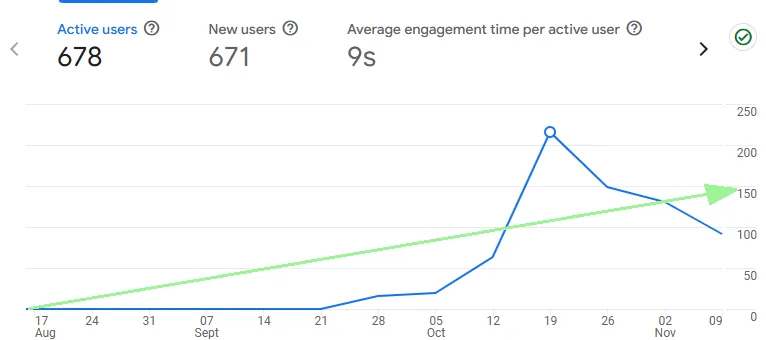
    The approach has produced measurable results. One UK professional services firm applied this framework and transformed from 18 weekly users to 213 in just 12 weeks, a 1,131% increase, with sustained engagement rates of 59.52%. Within weeks, they began receiving direct referrals via ChatGPT searches. The white paper details the complete transformation strategy.

    Why Traditional Approaches Fail

    Most B2B brands are unknowingly accelerating their own commoditisation. Our research reveals why three common practices, even when executed well, actively prevent AI discovery and erode brand distinction.

    Traditional SEO tactics aren’t just failing; they’re counterproductive in AI systems. Keyword optimisation strategies that worked for search engines backfire when AI systems evaluate content for recommendations. 

    The brands that recognise this shift early gain compound advantages. The white paper details which practices to abandon and which to double down on.

    The Stakes for 2026

    B2B buyers now spend 83% of research time away from sales representatives, increasingly turning to AI tools for vendor evaluation (6sense, 2024). Meanwhile, AI-driven traffic is growing 40% monthly.

    The First-Mover Window

    Research shows 89% of B2B buyers now use AI during their purchase journey (Forrester, 2024), whilst 60% of B2B decision-makers pay a premium for high-quality thought leadership (Edelman-LinkedIn, 2024). Early adopters establishing AI mindshare now will compound advantages over competitors still optimising for traditional search.

    The white paper includes a diagnostic framework to assess your current position and three immediate actions you can implement this week.

    What’s Inside

    The 2,500-word white paper provides:

    • The three forces systematically eroding content differentiation with specific mechanisms and examples
    • Our Distinct, Resonant, Memorable framework for evaluating content quality
    • Four pillars of Expert-Led AI with implementation guidance
    • Three real B2B case studies showing transformation from invisible to AI-recommended
    • Diagnostic questions to assess your current content strategy
    • Tactical starting points you can implement immediately
    • Research methodology and complete source citations

    This isn’t theory. Every insight is backed by data from 900,000+ webpage analysis, multiple academic studies, and real client transformations.

    Frequently Asked Questions

    How can B2B brands differentiate content when everyone uses AI?

    The white paper reveals that differentiation now depends on what you feed AI systems, not just the tools themselves. Our research identifies three layers of proprietary data that create unreplicable outputs and four pillars that separate thriving brands from commodity competitors.

    What is Expert-Led AI for content marketing?

    Expert-Led AI represents a strategic approach where human judgement guides AI implementation rather than AI driving content decisions. The white paper details the complete framework and provides case studies of B2B firms achieving measurable differentiation through this approach.

    Why does AI-generated content fail to differentiate brands?

    When AI trains on existing content that increasingly comes from AI itself, originality disappears. Our research documents this self-reinforcing cycle and provides specific countermeasures detailed across the white paper’s 17 pages.

    Download the White Paper

    We’ve spent considerable time researching this shift because we believe it represents the most significant change in B2B discovery since Google’s inception. The brands that understand this early will define their categories. Those that don’t risk commodity status.

    Download the white paper to explore the complete framework. After downloading, you’ll receive four curated emails over two weeks with case studies, actionable tactics, and a personal invitation to discuss your specific challenges.

    About Contentifai: An AI Native Content Marketing Agency

    We’re Contentifai, a creative content marketing agency that helps B2B brands build authority and drive growth through strategic website content that is written by humans and enhanced by AI.

    We are an AI Native B2B content marketing agency specialising in Expert-Led AI content strategies. We combine senior human talent, including strategists, writers, and subject experts, with advanced AI capabilities to deliver content that cuts through generic noise and creates lasting value. Our mission is to help brands amplify their unique voice through AI, not dilute it.

    For media enquiries, contact us:

    contentifai contact us email address

    Sources

    Ahrefs (2025) 74% of New Webpages Include AI Content (Study of 900k Pages)

    Content Marketing Institute (2024) B2B Content Marketing Benchmarks, Budgets, and Trends

    Edelman-LinkedIn (2024) B2B Thought Leadership Impact Report

    Sopro (2025) B2B Buyer Statistics for 2025 

    Leipzig University (2023) Search Quality Study: Is Google Getting Worse?

    Stanford (2025) Hallucination-Free? Assessing the Reliability of Leading AI Legal Research Tools

  • From Invisible to AI-Recommended: How One B2B Firm Scaled Weekly Users Through Semantic SEO

    From Invisible to AI-Recommended: How One B2B Firm Scaled Weekly Users Through Semantic SEO

    A UK consultancy transformed its website from near-zero organic visibility to a 1,231% increase in traffic from 18 to 213 weekly users in just 12 weeks by rebuilding its content for AI discoverability.

    In October 2025, something remarkable happened to a professional services website that had been virtually invisible for months. After languishing with just 18 weekly users despite thousands of monthly impressions, the site suddenly exploded to 213 new users in a single week: a transformation that would sustain itself for months to come.

    This wasn’t luck or a viral moment. It was the result of a strategic pivot from traditional SEO to semantic content architecture designed for AI discoverability.

    The timing couldn’t have been more critical. B2B buyers now adopt AI search three times faster than consumers, with 90% of organisations using generative AI in purchasing decisions. AI-driven traffic is growing 40% monthly and is projected to reach 20% of all B2B search by year’s end (Forrester Research via Digital Commerce 360, July 2025).

    This AI SEO success story highlights why B2B companies must prioritise semantic understanding over traditional SEO tactics like keyword density. Here’s how one firm made the transformation, and how you can too.

    Table of Contents

    Part 1: Background and Context

    The Familiar Paradox: Deep Expertise and Insights Hidden from Users

    Our client, a UK professional services firm specialising in inclusive consulting solutions, faced a familiar paradox. They possessed deep industry expertise and valuable insights their market desperately needed. Yet their website might as well have been invisible.

    From May to September 2025, the site received over 4,000 monthly impressions but averaged less than one click per day, translating to just 20-30 monthly organic users despite their deep industry expertise and the scale of impressions generated. Their average search position hovered between 50 and 70 across all queries: essentially invisible to both humans and AI systems. Despite genuine expertise in their field, their content remained buried on page five, six, or worse.

    They realised they had a website built for yesterday’s internet. Style-over-substance design prioritised visual appeal over navigability. Content optimised for traditional keyword density created passages that neither humans nor AI could meaningfully parse. 

    The site looked impressive but failed at its fundamental purpose: connecting expertise with those who needed it.

    Meanwhile, the market was shifting beneath their feet. B2B AI-generated traffic was exploding, and competitors were beginning to capture valuable AI-driven referrals. Every week of inaction meant losing ground in the race for AI mindshare in their niche.

    Part 2: The Challenge

    High Search Impressions yet low Engagement and Users Bouncing due to lack of Value

    In nine months, only 30 users had found the site through organic search despite over 36,000 impressions. The few who did arrive rarely engaged; bounce rates suggested visitors couldn’t find what they needed.

    The site tracked rankings for over 330 queries, yet averaged position 50-70 across the board. Topics where they held genuine expertise, from neurodiversity support to inclusive workplace strategies, generated impressions but virtually no clicks. Their deep knowledge remained locked behind an impenetrable wall of poor architecture and misguided optimisation.

    Technical analysis revealed fundamental barriers to AI discovery. The content lacked the E-E-A-T (Experience, Expertise, Authoritativeness, Trustworthiness) signals that determine eligibility for AI citations. Without these signals, AI systems couldn’t validate the content’s credibility or understand its relevance (ClickPoint Software, July 2025).

    Importantly, the site had no semantic relationships between content pieces. Each page existed in isolation, preventing AI systems from understanding the broader context and expertise. Structured data was minimal or absent entirely. The user experience was so fractured that even the 59.52% of organic visitors who engaged couldn’t navigate effectively.

    Traditional SEO tactics weren’t just failing; they were actively preventing AI discovery. Every week without semantic transformation meant competitors gained valuable AI mindshare.

    Part 3: The Solution

    A Complete Website Restructure with Semantic Roots for Advanced SEO and AI Discovery

    Between September and October 2025, we orchestrated a complete semantic rebuild focused on how AI systems actually process and recommend content.

    We shifted from keyword targeting to topic authority using RAG-optimised architecture. RAG (Retrieval-Augmented Generation) systems don’t match keywords: they convert queries to vector representations and match them against content based on semantic similarity. This meant rebuilding content to reflect meaning, not just terms (AWS, November 2025).

    The transformation touched every aspect of the site. Headers changed from keyword strings to natural language that mirrored how experts actually discuss topics. We rewrote the content to build a comprehensive understanding rather than hit keyword density targets. The result was that industry terminology appeared naturally within explanations, rather than being forced into predetermined slots.

    We implemented a comprehensive E-E-A-T enhancement strategy. Every piece of content gained verifiable expertise signals: author credentials, source citations, and clear methodology explanations. We created “citation-ready” answer nuggets of 40-80 words that AI systems could confidently extract and reference. Structured data focused on clarity over complexity, with FAQ schemas featuring genuine client questions.

    Most importantly, we built explicit semantic relationships between content pieces. Parent topics connected naturally to detailed explorations. Each page strengthened the overall knowledge graph that AI systems could navigate with confidence. The site transformed from isolated pages to an interconnected web of expertise.

    Part 4: The Impact

    An Explosion in New Users from AI and Search within Weeks of Relaunch

    The results were immediate and dramatic. Within a matter of weeks post-relaunch, the site saw 60 new users: a 233% increase from the 18-user baseline. The following week reached 213 new users. This growth proved sustainable, with months 2-3 maintaining 130-150 weekly users: a 650% sustainable improvement over the 20-user average from months before transformation. This converted a chronically invisible site into a consistent lead-generation engine.

    The traffic quality told the whole story. Organic users showed exceptional engagement, averaging 74.8 seconds on site with a 59.52% engagement rate: both significantly above typical benchmarks for AI-sourced traffic, suggesting that the semantic architecture was effectively positioning the site as an authoritative source worthy of deeper exploration. The homepage click-through rate improved to 6.36% when displayed, up from near zero. Perhaps most tellingly, 91% of new traffic arrived as ‘Direct’: a proxy metric for AI referrals, since ChatGPT and similar platforms typically don’t pass referrer data. While ‘Direct’ traffic can include bookmarks and word-of-mouth, the combination of sustained high engagement (74.8 seconds on-site), 59.52% active engagement rate, and high conversion intent strongly suggests a significant portion originated from AI platforms.

    Google Analytics Active Users Growth September - October 2025 from 0 users to 200+ spike and 150 avg sustainable users - for Contentifai case study

    Active Users Growth from September – October 2025: showing from 0 users to 200+ spike returning to 150 avg. sustainable users.

    The transformation sustained itself. Months two and three maintained 130-150 weekly users, a 650% improvement over the pre-transformation baseline. The site began appearing in AI citations for industry-specific queries. Each new piece of content strengthened the semantic web, making AI systems increasingly confident in their recommendations.

    Traditional SEO metrics improved as well. The comprehensive content structure and improved user signals lifted search rankings across the board. But the real victory was achieving what keyword optimisation never could: becoming a trusted source for AI-driven discovery.

    Expertise Now Discoverable by AI and Humans

    This semantic transformation succeeded because AI systems process content through vector similarity, not keyword matching. By building for semantic understanding rather than keyword density, the site became discoverable by both humans and the AI systems that increasingly guide B2B decisions.

    The approach scales across professional services, technology, and financial sectors. Any B2B expertise can be transformed for AI discovery using these principles. But with AI search growing 40% monthly, the window for first-mover advantage is closing.

    Your expertise deserves to be discoverable by both humans and the AI systems that shape modern B2B purchasing. The question isn’t whether to adapt for AI discovery, but how quickly you can make the transformation.

    Ready to transform your website for AI discoverability?

    Let’s discuss how semantic architecture can unlock your content’s potential. Book a discovery call to explore your AI SEO transformation.


    A Note on The Methodology

    These results reflect one professional services firm’s specific circumstances, audience, and market position between September and December 2025. While the semantic SEO framework applies broadly, traffic improvements will vary based on existing domain authority, content baseline, and market competition.

  • AI SEO for B2B: How to Make Your Brand Discoverable to ChatGPT, Perplexity, and AI Summaries in 2026

    AI SEO for B2B: How to Make Your Brand Discoverable to ChatGPT, Perplexity, and AI Summaries in 2026

    Discover the semantic SEO strategy that transforms B2B content for AI search engines, generating qualified leads through ChatGPT optimization in just weeks.

    A consultant in London discovered something unexpected in their analytics: qualified leads were arriving with a curious source attribution. “ChatGPT recommended you” appeared repeatedly in their contact forms. They hadn’t optimised for AI search engines. They hadn’t even known it was possible.

    This isn’t an isolated incident. 89% of B2B buyers now use AI during their purchase journey (Forrester, 2024), yet most B2B brands remain invisible to these systems. The shift from keyword rankings to AI recommendations represents the most significant change in B2B discovery since Google’s inception.

    Table of Contents

    The Hidden Advantage Most B2B Brands Are Missing

    While the marketing world obsesses over traditional SEO metrics and keyword rankings, a parallel discovery system has quietly emerged. B2B buyers now spend 83% of their research time away from sales representatives, increasingly turning to AI tools for vendor evaluation (6sense, 2024). Early case studies show significant potential. For example, a period care company achieved a 436% conversion rate increase when a relevant scientific study appeared in ChatGPT results.

    The fundamental difference? AI systems evaluate content completely differently from traditional search engines. They prioritise natural language, comprehensive explanations, and semantic relationships over keyword density. The old playbook of stuffing keywords into content actually makes you less visible to AI.

    We discovered this firsthand when strict keyword adherence was actually hurting our clients’ website performance. The moment we switched to semantic language techniques combined with specific SEO tactics in our proprietary hybrid method, clients immediately got results. One consultant needed their entire website rebuilt with semantic AI and SEO architecture. Within weeks of relaunch, they began receiving referrals via ChatGPT search.

    This creates an extraordinary opportunity for those who understand it. While competitors continue optimising for 2015 Google, you can build authority in the systems that B2B buyers increasingly trust for unbiased recommendations.

    The Semantic Revolution in B2B Content

    The path to AI discoverability means rethinking your content creation process. Our semantic content architecture for B2B goes beyond traditional optimisation, focusing on how AI systems actually process and recommend content.

    Vector-based search engines now process content through semantic similarity rather than keyword matching, allowing AI to find related concepts even when exact terms aren’t present (MongoDB, 2025). This validates what we’ve seen in practice: comprehensive topic networks outperform keyword clusters every time.

    Consider a finance client active in the United States who wanted to share their expertise in a content-saturated space while still benefitting from organic discovery and AI discovery. By restructuring their content around semantic relationships rather than keywords, they achieved both goals. Parent topics connected naturally to detailed explorations of specific services, creating a knowledge graph that AI systems could navigate confidently.

    The transformation to natural language proves most powerful. When content uses the language professionals actually use in meetings and emails, AI systems finally understand not just what companies do, but why it matters to buyers. This semantic SEO strategy creates sustainable AI visibility that continues to grow.

    We’ve also learned that trust signals matter enormously. Every statistical claim needs verifiable sources. Expert insights require clear attribution. The goal isn’t to game the system but to become genuinely useful to both AI engines and the humans they serve.

    Want the complete AI SEO roadmap?

    Download our white paper: “Brand Survival in the Age of AI” here

    Three Immediate AI SEO Tactics for B2B Content

    The beauty of semantic SEO lies in its immediate applicability. While comprehensive AI SEO for B2B requires strategic planning, you can start improving your AI discoverability today with these proven tactics.

    Tactic 1: Test Your ChatGPT Optimization Today

    Open ChatGPT right now. Search “[your expertise] providers in [your city]” for example, and see what appears. Then try Claude and Perplexity with the same query. The gaps you discover reveal exactly where your semantic content architecture needs strengthening.

    This baseline assessment takes minutes but provides invaluable intelligence. When we run this test for new clients, the results often shock them. Companies with excellent traditional SEO frequently discover they’re completely invisible to AI systems.

    Tactic 2: Rewrite Headers for Semantic SEO Strategy

    Your headers are likely killing your AI discoverability. Transform keyword-stuffed H2s into natural questions your clients actually ask. Instead of “B2B Financial Services London,” try “How Do B2B Companies Choose Financial Service Providers?”

    This simple shift aligns with how users query AI systems and dramatically improves semantic understanding. A fintech consultancy client active across Europe wanted to stand out in a content-noisy space. We found a novel content gap by rewriting all their headers as genuine client questions. The result? Content that not only ranked but actually started sales conversations.

    Tactic 3: Build Your Semantic Content Architecture

    Stop listing services and start explaining problems. Connect related concepts explicitly with phrases like “this approach differs from traditional methods because…” These connections build the knowledge graph AI systems need to understand your expertise comprehensively.

    Think of it as creating a web of understanding rather than isolated pages. Each piece of content should explicitly link to related concepts, creating pathways for AI to follow and understand your complete value proposition.

    Tracking AI SEO Performance for B2B Brands

    Unlike traditional SEO where rankings tell the story, AI discoverability manifests in subtler but equally valuable signals. The metrics that matter have fundamentally changed.

    Data-driven indicators

    Start monitoring lead sources for mentions of “ChatGPT,” “Perplexity,” or “AI recommended.” These direct attributions represent just the tip of the iceberg. Track unexplained direct traffic increases, which often indicate AI-driven visits that lack proper attribution.

    Set up form fields specifically asking “How did you hear about us?” with AI options included. Watch for clustering in contact times, as AI users frequently research outside traditional business hours. These patterns reveal the true impact of your semantic SEO efforts.

    While AI-driven traffic often shows higher conversion rates compared to traditional organic search, the volume remains significantly smaller at present. Current research suggests ChatGPT traffic is roughly 200x smaller than Google’s. This means your AI SEO strategy should complement, not replace, traditional SEO efforts. Focus on capturing high-intent, high-value leads through AI channels while maintaining broader visibility through conventional search.

    Customer intelligence signals

    The qualitative feedback proves even more valuable. Survey new clients about their research journey. Conduct follow-up calls to understand discovery paths. When clients mention finding exactly what they needed through AI recommendations, you know the semantic strategy works.

    Tools like Semrush’s AI toolkit and LLMrefs now track AI citations, but nothing replaces direct customer feedback for understanding real impact. Expect initial AI recognition within 3-4 weeks, with meaningful traffic changes by weeks 6-8.

    Common Questions About AI SEO for B2B

    Understanding how B2B content for AI search engines differs from traditional approaches raises important questions. Here’s what matters most when implementing semantic SEO strategies.

    What’s the difference between AI SEO and traditional SEO for B2B?

    Traditional SEO targets specific keywords for search rankings. AI SEO builds semantic understanding through natural language and comprehensive topic coverage. Where traditional SEO might focus on ranking for “consulting services,” AI SEO explains what consulting solves, how it works, and why businesses choose specific providers. The shift from keywords to concepts changes everything.

    How do I optimise B2B content for ChatGPT and Perplexity?

    Focus on natural language patterns, comprehensive explanations, and clear source attribution. These systems prefer content that thoroughly explains concepts using the language industry professionals actually use. Include verifiable facts, answer complete questions, and connect related ideas explicitly. Think conversation, not keywords.

    Does AI-generated content rank well in AI search engines?

    Ironically, AI systems often recognise and deprioritise purely AI-generated content. Human expertise combined with AI enhancement performs best, blending authentic industry insights with optimised structure. The key is maintaining genuine voice while improving clarity and comprehensiveness.

    Should B2B companies abandon traditional SEO for AI optimisation?

    Never. The most effective approach combines both strategies. Every client we’ve transitioned to semantic SEO has seen traditional metrics improve alongside AI visibility. Natural, valuable content serves all audiences. Semantic richness benefits both AI understanding and human readers.

    The First-Mover Advantage in Semantic SEO

    The window of opportunity for establishing AI search dominance won’t remain open indefinitely. Companies investing in semantic content architecture for B2B now will reap compound benefits as AI adoption accelerates.

    Most B2B competitors haven’t adapted to AI discovery yet. They’re still chasing keywords while buyers increasingly rely on AI recommendations. This gap represents your opportunity. B2B companies implementing high-end semantic SEO campaigns using thought leadership strategies achieve an average ROI of 748%, significantly outperforming traditional keyword-focused approaches (Genysis Growth, 2025).

    Semantic authority compounds over time. Early investment in natural, comprehensive content builds recognition across AI systems. As these platforms become primary research tools, your established presence becomes increasingly valuable. The dual benefit surprises many: brands optimising for AI discovery often see traditional SEO improve simultaneously.

    While others debate whether AI search matters, forward-thinking B2B brands are already capturing the 89% of buyers using AI for research. The question isn’t whether to adapt, but how quickly you can implement these changes.

    Ready to capture the AI-driven B2B market?

    Contact us today to discuss a content campaign that makes your brand AI-visible.

  • After the Consumer Gold Rush: Why Wealth-Tech is Fintech’s Next Frontier

    After the Consumer Gold Rush: Why Wealth-Tech is Fintech’s Next Frontier

    Fintech pioneers who revolutionised consumer banking are now turning their attention to the antiquated world of private wealth management.

    This article was originally published in FinanceX Magazine’s “All About Technology” Edition (October 2025) exploring the next frontier of financial innovation. We’re grateful for the opportunity to share how Europe’s fintech pioneers are bringing long-overdue disruption to private wealth management with the European financial services community.

    Table of Contents

    The Three-Click Tesla Problem

    A wealthy client can order a Tesla in three clicks on his phone, but adjusting his investment portfolio takes three weeks of phone calls, emails, and scanned forms. This grim reality, shared by David Brear, group CEO of consultancy 11:FS, encapsulates the paradox facing Europe’s high net worth (HNW) individuals in 2025.

    While Monzo, Starling, Revolut, and N26 have transformed consumer banking into a seamless digital experience, the world of private wealth management remains stubbornly analogue. Now, the same fintech pioneers who disrupted retail banking are setting their sights on a much larger prize: the £5.5 trillion that will change hands between generations in the UK and EU by 2030.

    The Consumer Banking Revolution: Mission Complete

    The consumer fintech revolution has reached its saturation point. In 2024, the value of investments into UK tech companies plummeted by 36% to £18.5bn (Beauhurst, 2025). The consumer banking market has been thoroughly disrupted, margins squeezed, and incumbents forced to modernise.

    Indeed, Revolut has reached a stage of growth where it can offer a private banking offering for wealthy individuals (Beauhurst, 2025), signalling that even consumer-focused challengers recognise where the next opportunity lies.

    The question facing fintech innovators is clear: where next?

    The £5.5 Trillion Opportunity

    The answer lies in the vast, underserved wealth management sector. The global combined corporate and private balance sheet has ballooned in the last 20 years, from net worth and liabilities of €450 trillion in 2000 to €1,530 trillion in 2020 (McKinsey, 2023). In the UK alone, over £1.3 trillion sits in wealth management, with an estimated £5.5 trillion set to pass between generations by 2030.

    Yet this enormous market operates on technology and processes that would be unrecognisable to users of modern consumer banking apps.

    “It Was Faxed in from the 1990s”

    The problems facing HNW individuals read like a catalogue of banking archaeology:

    Manual onboarding and KYC: Private banks often require weeks of paperwork for account setup, contrasting sharply with challenger banks’ instant digital onboarding.

    Inefficient reporting: Portfolio statements still arrive as mailed documents or PDF attachments with delayed information, lacking real-time access.

    Hidden fees and opacity: 78% of the surveyed banks in the US believe digital transformation is essential to meet changing customer expectations (KPMG via McKinsey, 2023), yet most private banks still operate with opaque fee structures.

    David Brear of 11:FS doesn’t mince words: “The likes of Monzo and Starling are light-years ahead for basic retail banking but when high net worth individuals graduate to the organisations looking to serve them, they are often full of hidden fees, archaic account opening and reporting that looks as if it was faxed in from the 1990s.”

    Europe’s New Wealth-Tech Vanguard

    The response to this opportunity has been swift and ambitious. Leading the charge is Project Arnaud, spearheaded by Jason Bates (co-founder of Monzo and Starling), David Brear (11:FS), and Max Koretskiy (Blackshield Capital). With £50 million already earmarked and another investment round imminent, they’re building what they call “Monzo for HNWs.”

    Max Koretskiy frames the opportunity: “The largest wealth transfer in history is colliding with rising client expectations, shaped by consumer tech. Over £1 trillion will change hands over the 2020s in the UK alone, resulting in a five times increase of wealth held by millennials.”

    Not to be outdone, Anthony Thomson, founder of Metro Bank and Atom Bank, is launching the Family Offices Bank with a targeted go-live in late 2026. The Family Offices Bank executives include ex-CEO of Virgin Money Paul Pester, ex-CFO of Commonwealth Bank of Australia Stuart Grimshaw, Barclays 19-year veteran Samantha Bamert & ex-CTO of UK Monument Bank Sudip Dasgupta (Caproasia, 2025).

    Thomson’s research revealed a clear message from family offices worldwide: “Their needs have evolved but their banks haven’t. Too many family offices and UHNWIs are oversold, underserved, misunderstood, or treated like an afterthought.”

    Across Europe, the momentum is building:

    Finlight (UK): A digital operating system for family offices that integrates risk, performance, reporting, and operations, helping wealthy clients avoid the inefficiencies of fragmented, manual wealth management processes.

    Altoo (Switzerland): A Zug-based fintech providing an independent digital wealth platform specifically for HNWs and family offices, focusing on portfolio consolidation and reporting: areas where traditional private banks still rely on PDFs and legacy portals.

    Finary (France): A Paris-based platform for affluent investors and family offices, providing modern tools for tracking and analysing assets across multiple banks and geographies in a single digital dashboard.

    The Millennial Catalyst

    The urgency for change is driven by a generational shift. According to Deloitte’s 2023 Global Wealth Management Study, 67% of HNW clients under 40 consider leaving their wealth manager due to poor digital experience. Capgemini’s World Wealth Report 2024 found that 71% of millennial HNWs expect digital-first engagement, compared with only 27% satisfaction with current wealth manager platforms.

    This isn’t just about convenience; it’s about fundamental expectations. The next generation of wealth holders are digitally native. They expect 24/7 mobile access, automated rebalancing, ESG integration, and transparent fee structures as standard, not luxury features.

    Furthermore, PwC’s Future of Private Banking Report delivered this sobering statistic: over 70% of private banks in Europe are running on platforms that are 15+ years old. The technology gap between what clients expect and what banks deliver has never been wider.

    The Race Against Time

    The window for transformation is narrowing. Private banks are pouring money into protective measures; industry experts predict spending on financial cybersecurity will top $43 billion by 2026 (Global Finance Magazine, 2025), yet much of this investment goes towards patching legacy systems rather than fundamental modernisation.

    Traditional private banks face a choice: modernise rapidly or watch as nimble wealth-tech startups capture the most valuable clients of the next generation. As Ryan Lemand, co-founder and CEO of Neovision Wealth Management, notes: “Given that family offices control assets worth more than $6 trillion globally, any shift in this dynamic could seriously impact bank revenues” (Global Finance Magazine, 2025).

    The consumer fintech revolution took less than a decade to transform retail banking beyond recognition. With trillions at stake and a new generation of wealth holders demanding change, the wealth-tech revolution promises to move even faster.

    For Europe’s HNW individuals, the message is clear: the same innovation that transformed consumer banking is finally coming to private wealth. The only question is whether traditional banks will lead this transformation or become its casualties.


    The Next Chapter of Fintech Innovation Needs a New Narrative

    At Contentifai, we understand that wealth-tech isn’t just about digitising old processes; it’s about reimagining how technology serves human ambition at scale. Just as Project Arnaud and Family Offices Bank are bridging the gap between Tesla-speed consumer tech and fax-era private banking, we bridge the gap between complex financial innovation and compelling human stories. Our human+AI content approach helps wealth-tech pioneers and forward-thinking financial institutions articulate not just their technological advantages, but the fundamental shift they’re bringing to how wealth is managed, preserved, and transferred across generations.

    Ready to position your firm at the forefront of the wealth-tech revolution? Let’s craft content that speaks to both the innovators disrupting the industry and the sophisticated clients demanding change.


    Reading:

    Fintech pioneers unite to build bank for high net worth individuals – Finextra, 2025

    Anthony Thomson to launch new global wealth bank – Finextra, 2025

    European private banking: Resilient models for uncertain times – McKinsey, 2023

  • Reclaiming Credit Visibility: How Abound Gives the Credit-Invisible a Fighting Chance

    Reclaiming Credit Visibility: How Abound Gives the Credit-Invisible a Fighting Chance

    The Credit Trap That Sparked a Revolution: From Credit-Invisible to Credit Innovator: How a Founder Turned a “Computer Says No” Moment into Abound.

    This article was originally published in FinanceX Magazine Issue #15 (August 2025) as part of their summer edition exploring inclusive fintech innovations across the UK market. We’re grateful for the opportunity to share Abound’s inspiring journey from personal frustration to profitable scale with the European fintech community.

    When Dr Michelle He arrived in the UK, she carried a solid job, a PhD in AI, and years of experience at EY, yet she couldn’t secure a basic loan. She was “credit invisible.” That moment stuck with her. It wasn’t her finances that were the problem; it was the system itself. 

    From that experience, Abound was born: a fintech that finally sees the person behind the score.

    Table of Contents

    Two Ex-Consultants Who Decided to Stop Advising and Start Building

    Michelle He isn’t just another fintech founder. She’s lived through the broken system she’s now fixing. A former EY director in lending analytics, she understands both the technology and the human side of credit. Her co-founder, Gerald Chappell, brings McKinsey-honed strategy as the former Global Head of Digital Lending. Together, they’re not chasing glamour but pursuing fairness. 

    They launched Abound in 2020 to redefine how credit decisions are made, particularly for those overlooked by conventional credit scoring.

    Render: The Platform That Reads Your Bank Statements Like a Human Would

    Traditional credit scores reduce people to numbers. Abound’s proprietary platform, Render, goes deeper. Using Open Banking, Render analyses real-time transaction data: income patterns, spending habits, essentials versus discretionary expenses, to assess what each person can truly afford. 

    The results speak for themself: approximately 70-75% fewer defaults compared to industry averages. To Abound, a borrower isn’t a risk category. They’re a story that deserves fair, reasonably priced credit.

    From Zero to £900 Million in Loans (and Actually Making Money)

    Fast forward from a spark of an idea to figures that command attention. By 2024, Abound achieved profitability, just three years after launch. The company has issued over £900 million in loans, and in the 12 months to February 2025, net profit rose to £7.5m (from £0.3m) on revenue of £66.8m (+151%).

    Investors aren’t just watching; they’re backing this vision. Support comes from Citi, GSR Ventures, Waterfall Asset Management, and Sir Tom Hunter. In March 2025, Deutsche Bank committed a £250 million credit facility, pushing lending capacity to £1.6 billion. Render’s success demonstrates that treating people as individuals, not statistics, doesn’t just work. It scales brilliantly.

    Meet Zara: Part-Time Tutor, Single Mum, Finally Approved

    Consider Zara, a part-time tutor and single parent whose income fluctuates monthly. She’s responsible, consistently pays rent and bills, yet traditional banks view her with suspicion. Enter Abound. Zara connects her bank account, and Render sees beyond the irregular income: consistent earnings, prudent spending, clear priorities. Within hours, she’s approved for a loan that helps manage childcare costs and consolidate debt, without crushing interest rates.

    It’s more than finance; it’s validation that someone recognised the real Zara, not just a credit profile.

    Open Banking Finally Found Its Killer App (Hint: It’s Not Payments)

    Growth-at-any-cost is fading, and Abound represents something refreshing: profitable, scalable, and inclusive. While Open Banking payments still trail cards in the UK, lending use-cases like Render show how cash-flow data can deliver tangible value. Abound demonstrates what works: practical, humane use of data. With Render already licensing to lenders across Europe, Abound isn’t merely building a business. It’s building a better financial system. 

    When financial services feel increasingly impersonal, their approach reminds us that fairness and efficiency can coexist.

    The Future Where Your Life Story Matters More Than Your Credit Score

    From Michelle’s personal struggle to a business supporting thousands of stories like Zara’s, Abound embodies a shift in fintech, from hype to humanity. The next time someone arrives with patchy credit but a full life, systems like Render will offer more than rejection. They’ll offer opportunity. 

    In that sense, Abound isn’t just lending money. It’s restoring dignity to credit, one person at a time.

    Your Fintech Story Deserves More Than a Traditional Case Study

    At Contentifai, we specialise in telling the human stories behind financial innovation. Just as Abound saw beyond Michelle’s credit score to recognise her true potential, we see beyond product features to uncover the transformative narratives that make fintech meaningful. Our human+AI content approach helps financial services companies articulate not just what they do, but why it matters to real people facing real challenges. 

    Ready to tell your story of financial transformation? Let’s turn your vision into content that connects.


    Reading

    UK AI-led fintech Abound announces new funding round to increase access to fair credit – Abound, 2025

    Profits soar at fintech Abound as borrowers turn to AI loans – The Times, 2024

    AI fintech Abound, co-led by diverse female founder, lands £250m to modernise UK lending – Tech Funding News, 2025

  • Contentifai Selected for Stage 2 Creative UK Create Growth Programme Cohort

    Contentifai Selected for Stage 2 Creative UK Create Growth Programme Cohort

    We’re delighted to announce that Contentifai has been selected to join the Stage 2 cohort of the North East Creative UK Create Growth Programme, alongside 20 other ambitious creative businesses from across the region.

    This six-month programme, delivered by Creative UK, represents a significant milestone in Contentifai’s journey as we enter the most exciting stage of our growth to date. The programme will provide invaluable support as we refine our business model and develop our scaling strategy for our next phase of expansion.

    Table of Contents

    Creative UK Create growth Programme North East Cohort Photo
    Image credit to Creative UK Create Growth Programme North East

    Building Connections with Fellow Innovators

    The programme kicked off with an energising workshop at Northern Stage in Newcastle, where we had the opportunity to connect with fellow participants from diverse creative sectors. From digital agencies to film production companies, the cohort represents the breadth and depth of creative talent in the North East.

    We’re particularly excited about the collaborative opportunities the course presents. The initial sessions have already sparked productive conversations about potential partnerships and shared learnings that will benefit all participants as we navigate our growth journeys together.

    Strategic Development for Sustainable Growth

    Over the next six months, we’ll be working closely with Creative UK mentors and investment specialists to:

    • Refine our content marketing service offerings for B2B SMBs
    • Develop robust scaling strategies for our human+AI content creation model
    • Prepare for potential investment opportunities
    • Strengthen our position as a leading content marketing agency in the UK

    The programme’s focus on investment readiness aligns perfectly with our ambitions to expand our reach and help more UK businesses harness the power of strategic content marketing.

    Looking Ahead: Committed to Our Core Mission

    As we embark on the programme, we remain committed to our core mission: helping B2B SMBs build websites that work as strategic assets for long-term growth. This opportunity with Creative UK will accelerate our ability to deliver on that promise at scale.

    We’ll be sharing updates on our progress throughout the programme. Follow our journey as we work alongside Creative UK and our fellow cohort members to shape the future of content marketing in the North East and beyond.

    Resources

    Introducing the Latest North East Creative UK Create Growth Programme Cohorts

  • The Curious Case of the Engineers Who Taught Turkey to Invest

    The Curious Case of the Engineers Who Taught Turkey to Invest

    How two engineers built a fintech empire from $500k by turning Turkey’s investment market from fool’s gold into digital treasure.

    This article was originally published in FinanceX Magazine Issue #14 (July 2025) as part of their summer edition exploring fintech success stories across emerging markets. We’re grateful for the opportunity to share this inspiring transformation story with the European fintech community.

    In Greek mythology, King Midas’s touch turned everything to gold, a blessing that became a curse when he couldn’t eat, drink, or embrace his loved ones. In modern Turkey, a different Midas has performed an equally transformative feat, but this time the golden touch is democratising wealth rather than hoarding it. The fintech startup Midas has turned 2 million Turks into investors in just three years, proving that sometimes the best disruption comes not from financial insiders, but from engineers who see a broken system and simply decide to fix it.

    Table of Contents

    The Kingdom of Barriers

    When electrical engineer Egem Eraslan returned to Turkey after working in Boston, he discovered a financial kingdom that seemed designed to keep its citizens out. In 2020, only 1.5 million people in this nation of 80 million were investors, a penetration rate that would embarrass most developing economies. The barriers were absurd: $25 per transaction fees for US stock trades, $25,000 minimum balance requirements, and a five-day onboarding process that felt more like applying for a mortgage than opening an investment account.

    “Mobile banking in Turkey is very good and widespread,” Eraslan told TechCrunch, “but there was a lack of investment in equities products because of a lack of infrastructure.” This wasn’t just a technology problem; it was a generational injustice. While Turkish millennials watched their global peers build wealth through fractional shares and commission-free trading, they were locked out by legacy systems that treated investing like an exclusive club for the wealthy.

    The irony wasn’t lost on Eraslan. In a country where inflation regularly hits double digits (reaching 50% by 2022), Turks desperately needed investment options to protect their savings. More than half the population already stored wealth in foreign currencies as a hedge against the volatile lira. Yet the very tools that could help them grow that wealth remained frustratingly out of reach.

    Building the Golden Infrastructure

    Unlike the mythical Midas who received his power from the gods, Eraslan and co-founder Umut Bozkurt had to build their transformation engine from scratch. With less than $500,000 (pocket change by Silicon Valley standards) they created something that would have cost Western fintechs millions: complete self-clearing, self-custody, and self-execution infrastructure.

    “We had to launch multiple products with our own self-clearing, custody and with the entire value chain,” Eraslan explained. “If you’re Robinhood, you don’t have to do self-custody or self-clearing.” This wasn’t a choice; it was necessity. Turkey’s financial infrastructure simply didn’t offer the plug-and-play solutions that American or European fintechs take for granted.

    The engineering feat they pulled off was remarkable. They slashed fees from $25 to $1.50 per trade, eliminated minimum balance requirements entirely, and compressed the onboarding process from five days to under ten minutes. By April 2021, when Midas launched with a massive waitlist, they had created Turkey’s first truly digital brokerage, one that made “download-to-first-trade in less than 10 minutes” a reality.

    The Golden Generation

    The transformation Midas triggered reads like a financial fairy tale. Within their first year, over $100 million was traded on the platform. By 2024, they had 2 million users, more than doubling Turkey’s entire investor population. But the most striking statistic isn’t the growth rate; it’s the demographics. Half of Midas users are first-time investors under 30. While nationally only 30% of Turkish investors are under 35, on Midas that number jumps to 70%.

    This isn’t just market expansion; it’s cultural revolution. Midas didn’t just make investing cheaper. They made it comprehensible. The company produces daily podcasts, weekly newsletters, detailed company profiles, and educational content that breaks down market complexities in digestible Turkish. They’re not just processing trades; they’re teaching an entire generation how to build wealth.

    The impact is measurable in cold, hard cash. In 2023 alone, Midas saved Turkish investors $70 million in commissions. For young Turks facing 50% inflation, this platform isn’t just convenient. It’s essential financial armour against currency devaluation.

    From Seed to Series A: The Midas Touch Attracts Gold

    Investors recognised the alchemy at work. Just eight months after inception, Spark Capital and Earlybird Digital East Fund led an $11 million seed round, one of the largest fintech seed investments in Turkish history. The real validation came in April 2024 when Portage led a $45 million Series A, the biggest ever for a Turkish fintech. The funding was so significant that Nasdaq celebrated it on their Times Square billboard, a moment of recognition that would have seemed impossible just three years earlier.

    But perhaps the most impressive feat? Midas hit profitability in 2023. In an industry where growth-at-all-costs is gospel, these engineers built a sustainable business while revolutionising an entire market.

    The Expanding Kingdom

    Today, Midas is expanding beyond equities into cryptocurrency, mutual funds, and high-yield savings accounts. They’re also looking beyond Turkey’s borders to other emerging markets where similar barriers lock out retail investors. Their infrastructure-as-a-service model already powers investment offerings for one of Turkey’s largest banks, with more partnerships in the pipeline.

    “We believe every consumer finance company should work on growing their customer’s wealth, and Midas is here to help,” Eraslan declared. It’s an ambitious vision, but given their track record, not an unrealistic one.

    The Real Midas Touch

    Unlike the cursed king of myth, this Midas has created prosperity that can be shared, not hoarded. By building infrastructure where none existed and simplifying processes that were needlessly complex, two engineers have given millions of Turks the tools to protect and grow their wealth.

    For European fintech founders facing their own regulatory mazes and infrastructure challenges, the Midas story offers a powerful lesson: sometimes the biggest opportunities lie not in competing with existing systems, but in building entirely new ones. With just $500,000 and a clear vision, it’s possible to transform not just a market, but an entire nation’s relationship with money.

    In mythology, King Midas learned too late that true wealth isn’t gold you can’t share. Turkey’s Midas understood this from the start, building a platform that turns financial barriers into bridges. That’s a transformation worth more than all the gold in ancient Phrygia.

    At Contentifai, we believe the most compelling fintech stories come from understanding both the human challenges and technological solutions. Through our human+AI approach to content creation, we help financial services companies tell their transformation stories in ways that resonate with audiences and inspire action. Whether you’re disrupting traditional banking or building infrastructure for the future, we can help articulate your vision clearly and compellingly.


    Reading

    TechCrunch, “Equities platform Midas raises $45M Series A as fintech retains its sparkle in Turkey“, April 19, 2024

    PR Newswire, “Meet Midas, Turkey’s first retail investing startup, which has raised $11M Spark Capital, Earlybird Digital East and Nigel Morris“, February 7, 2022

    Tech.eu, “Appealing to the next generation of investors, Turkey’s Midas raises $11 million in seed round“, February 9, 2022

  • The 12-Week Content Transformation: A Strategic Refresh Approach for B2B Websites

    The 12-Week Content Transformation: A Strategic Refresh Approach for B2B Websites

    With industry estimates suggesting B2B websites require significant updates every 2-3 years, your carefully crafted content is losing relevance faster than you might realise. This comprehensive guide reveals how to transform your ageing digital assets into strategic business drivers through a proven 12-week refresh methodology.

    Picture this: you’ve invested thousands in website content over the past few years, carefully building your digital presence one blog post, case study, and service page at a time. Yet your analytics tell a different story. Traffic has plateaued, conversions are dropping, and that comprehensive resource hub you launched eighteen months ago? It’s gathering digital dust whilst your competitors capture your ideal clients.

    You’re not alone in this challenge. The uncomfortable truth about B2B content is that it begins deteriorating the moment you hit publish. industry observers estimate suggest that B2B websites need substantial refresh within 2-3 years, whilst contact databases decay at an annual rate of 22.5%, illustrating how quickly all digital assets lose value without active maintenance (Bizopia, 2024; Smarte Pro, 2024).

    This guide introduces a systematic B2B content refresh methodology that transforms outdated, underperforming content into a strategic business asset. Through a structured 12-week process, you’ll discover how to audit, prioritise, refresh, and amplify your existing content to recapture lost traffic, re-engage your audience, and revitalise your digital presence.

    Table of Contents

    The Hidden Crisis of B2B Content Decay

    Your website content faces an invisible enemy: time. Research reveals that B2B contact data decays at a monthly rate of 2.1%, compounding to an annual deterioration of 22.5% (Smarte Pro, 2024). Whilst this research specifically addresses database decay, it illustrates a broader principle: all B2B digital assets lose value over time without active maintenance.

    The implications are serious enough that public companies now acknowledge content maintenance as a material business risk in their SEC filings. MoneyHero Ltd’s 2025 disclosure specifically states that companies “must continuously invest in creating, curating and updating relevant content” and warns that “failure to offer high-quality content in a timely manner that aligns with users’ preferences and demands may result in a decline in user engagement, retention and acquisition” (SEC Archives – MoneyHero Ltd, Form 20-F, 2025).

    For B2B websites specifically, the decay manifests in ways that directly frustrate potential buyers. Recent buyer research identifies four critical pain points: poor usability and navigation, hidden pricing information, lack of technical detail, and slow, outdated interfaces (Bootstrap Creative, 2024). These aren’t merely aesthetic concerns; they’re conversion killers that send qualified prospects straight to your competitors.

    Consider the compound effect of content neglect. A blog post published today will gradually lose effectiveness as statistics become outdated, industry terminology shifts, and search algorithms change. Factor in changing buyer expectations and emerging competitors, and you begin to understand why even evergreen content requires regular attention.

    The traditional “publish and pray” approach simply doesn’t work in this environment. Reactive updates, triggered only when someone notices an embarrassing error or outdated statistic, create a patchwork of inconsistency that undermines your brand authority. What’s needed is a strategic content update process that addresses decay systematically rather than symptomatically.

    Understanding the 12-Week Content Transformation Framework

    Here’s where traditional content maintenance becomes strategic transformation. Instead of treating content updates as a tedious housekeeping task, this methodology positions refresh as a business growth initiative that fits naturally into your quarterly planning.

    Why twelve weeks? This content strategy timeline mirrors natural business rhythms whilst providing sufficient time for meaningful transformation without overwhelming your resources. It’s long enough to achieve substantial results yet short enough to maintain momentum and demonstrate clear ROI to stakeholders.

    The framework aligns with Google’s quality guidelines, which emphasise creating “helpful, reliable, people-first content” that demonstrates experience, expertise, authoritativeness, and trustworthiness (Google Search Central, 2025). By systematically refreshing your content, you’re not just updating facts; you’re reinforcing E-E-A-T signals that search engines use to evaluate content quality.

    The framework rests on four foundational pillars that distinguish strategic refresh from tactical tinkering:

    Comprehensive Discovery: A proper website content audit goes beyond counting pages and checking links. It examines content performance, audience alignment, competitive positioning, and technical health to create a complete picture of your digital assets’ current state.

    Strategic Prioritisation: Not all content deserves equal attention. The framework employs a sophisticated prioritisation matrix that identifies high-impact opportunities, consolidation candidates, and sunset targets, ensuring resources focus where they’ll generate maximum return.

    Phased Implementation: Rather than attempting everything simultaneously, the methodology breaks transformation into manageable phases. Each week builds upon previous progress, creating momentum whilst preventing overwhelm.

    Continuous Measurement: Every action ties to measurable outcomes. From baseline metrics through final analysis, the framework tracks progress against defined KPIs, demonstrating clear value and informing future content decisions.

    This structured approach transforms content refresh from a cost centre into a value driver, turning your website from a static brochure into a dynamic business development tool. It’s worth noting that whilst this guide presents a comprehensive 12-week journey, every B2B website faces unique challenges. Your specific transformation might emphasise different areas or adjust timelines based on your industry, resources, and objectives. That’s why we take a consultative approach, adapting the framework to fit your particular situation rather than forcing a one-size-fits-all solution.

    Phase 1: Strategic Website Content Audit (Weeks 1-4)

    The foundation of any successful content transformation lies in understanding exactly what you’re working with. This discovery phase might feel like archaeological excavation at times, unearthing content pieces you’d forgotten existed, but it’s essential groundwork that determines the success of everything that follows.

    Week 1: Establishing Your Content Reality

    The transformation journey begins with brutal honesty about your content’s current state. This initial website content audit creates a comprehensive inventory of every piece of content on your site, from cornerstone guides to forgotten blog posts lurking in your archives.

    Start by documenting basic metrics for each content piece: publication date, last update, current traffic, engagement rates, and conversion contribution. This baseline data becomes your transformation scorecard, allowing you to measure improvement and demonstrate ROI.

    Technical health assessment runs parallel to content inventory. Identify broken links, slow-loading pages, mobile responsiveness issues, and other technical factors that compound content decay. Create a “decay heat map” that visualises which sections of your site need urgent attention versus those performing adequately.

    Following Google’s guidance on self-assessment, evaluate each piece against key quality questions: Does it provide original information? Does it offer substantial value compared to other search results? Is the expertise behind the content clear and trustworthy? (Google Search Central, 2025).

    The first week often reveals uncomfortable truths. Companies frequently discover they have far more content than they realised, much of it redundant, contradictory, or completely forgotten. This discovery phase sets the foundation for strategic decision-making in subsequent weeks.

    Week 2: Aligning Content with Audience Needs

    With your content inventory complete, week two focuses on alignment assessment. Modern B2B buyers consume between 3 and 7 pieces of content before engaging with sales, making content alignment essential for conversion success (LinkedIn, 2024).

    Map each content piece to specific stages of your buyer journey. Which pieces attract new visitors? Which nurture consideration? Which support final purchase decisions? This mapping exercise typically reveals significant gaps, particularly in middle-funnel content that builds trust and demonstrates expertise.

    Voice and tone consistency review follows mapping. Over time, especially with multiple contributors, brand voice tends to drift. Some content sounds corporate and formal whilst other pieces adopt a casual blog style. This inconsistency undermines authority and confuses visitors about your brand personality.

    Apply Google’s “Who, How, and Why” framework to assess content credibility. Is authorship clear? Do you explain how products were tested or services delivered? Most importantly, why does this content exist – to genuinely help readers or merely to attract search traffic? (Google Search Central, 2025).

    Week 3: Competitive Intelligence Gathering

    Week three shifts focus outward, examining how your content compares to industry leaders and direct competitors. This isn’t about copying competitors but understanding the content environment your buyers navigate daily.

    Benchmark your content depth, format variety, and topic coverage against three to five key competitors. Where do they excel? Where do they fall short? Most importantly, where can you differentiate through unique insights, better user experience, or more comprehensive coverage?

    Format innovation opportunities often emerge during competitive analysis. Perhaps competitors rely heavily on text-based content whilst your audience craves video demonstrations. Maybe everyone publishes lengthy whitepapers when your buyers prefer interactive tools or concise checklists.

    This competitive intelligence directly informs your strategic content update priorities, ensuring refreshed content doesn’t just match competitor offerings but exceeds them in ways that matter to your specific audience.

    Week 4: Building Your Prioritisation Matrix

    The final week of Phase 1 transforms analysis into action through strategic prioritisation. Not every piece of content deserves refreshing; some should be consolidated, others retired entirely.

    Develop a prioritisation matrix plotting content pieces across two axes: business impact and refresh effort. High-impact, low-effort items become quick wins for early implementation. High-impact, high-effort pieces require careful planning and resource allocation. Low-impact items, regardless of effort required, become candidates for consolidation or retirement.

    Content consolidation opportunities frequently emerge during prioritisation. Rather than maintaining five mediocre blog posts on related topics, combining them into one comprehensive guide often delivers better results for both users and search engines. This approach aligns with Google’s preference for “substantial, complete, or comprehensive description of the topic” over thin, scattered content (Google Search Central, 2025).

    Sunset recommendations require careful consideration but prove essential for content health. Outdated product pages, obsolete industry commentary, and superseded methodology guides don’t just waste maintenance resources; they actively confuse visitors and dilute your authority.

    Phase 2: Priority Content Implementation (Weeks 5-8)

    Armed with insights from your audit, it’s time to roll up your sleeves and start the actual transformation. This phase balances quick wins that build momentum with deeper content work that drives lasting results.

    Week 5: Capturing Quick Wins

    Phase 2 begins with immediate impact opportunities that demonstrate the value of strategic refresh whilst building momentum for larger transformations. These quick wins address the most visible symptoms of content decay without requiring extensive resources.

    Statistical updates represent the lowest-hanging fruit. With B2B contact databases decaying at 22.5% annually – a rate that mirrors content obsolescence patterns – even evergreen content contains outdated data that undermines credibility. Systematically update statistics, refresh industry references, and correct outdated claims across your priority content.

    Meta description and title optimisation follows, ensuring each page clearly communicates value whilst incorporating current search terms. Many B2B sites neglect these fundamental elements, missing opportunities to improve click-through rates from search results.

    According to Google’s guidelines, even small updates should focus on providing “substantial additional value and originality” rather than simply copying or rewriting existing sources (Google Search Central, 2025).

    Internal linking enhancement creates immediate value by connecting related content pieces and distributing authority throughout your site. Broken link remediation removes frustrating dead ends that damage user experience and search rankings equally.

    Week 6-7: Core Content Transformation

    With quick wins building confidence, weeks six and seven tackle substantial content rewrites. This is where B2B content refresh moves beyond surface updates to fundamental transformation.

    Priority page selection follows your Phase 1 matrix, focusing on high-impact content that directly supports business objectives. Service pages, cornerstone guides, and high-traffic blog posts typically top this list.

    Each rewrite follows a strategic process. First, analyse current performance and identify specific weaknesses. Next, research current industry trends, buyer language, and competitive approaches. Then, rewrite with clear objectives: improved clarity, stronger value proposition, better search optimisation, and enhanced user experience.

    Throughout this process, maintain focus on Google’s E-E-A-T principles. Ensure content demonstrates first-hand expertise, provides clear attribution, and genuinely serves user needs rather than search engine requirements (Google Search Central, 2025).

    Integration of multimedia elements often distinguishes refreshed content from original versions. Static text transforms into dynamic experiences through relevant images, explanatory diagrams, embedded videos, or interactive elements that engage modern B2B buyers.

    Week 8: Optimising Content Architecture

    Week eight focuses on structural improvements that multiply the impact of individual content updates. Content architecture optimisation transforms scattered pages into coherent user journeys that guide visitors toward conversion.

    Strategic consolidation merges related content pieces into comprehensive resources. Those five blog posts about data security? They become chapters in an authoritative guide that ranks better and serves users more effectively. This consolidation reduces maintenance burden whilst improving user experience.

    Hub and spoke structures organise content topically, creating clear pathways for both users and search engines. A central “hub” page provides overview and navigation whilst detailed “spoke” pages dive deep into specific aspects. This architecture supports multiple user needs whilst building topical authority.

    Redirect implementation ensures consolidation doesn’t sacrifice existing search equity. Proper 301 redirects preserve rankings whilst guiding users to improved content locations. This technical housekeeping prevents the frustrating 404 errors that plague many B2B sites.

    Phase 3: Amplification and Future-Proofing (Weeks 9-12)

    The final phase ensures your refreshed content achieves maximum impact whilst establishing systems to prevent future decay. Think of it as installing both a new engine and a maintenance schedule for your content machine.

    Week 9-10: Technical Enhancement for Maximum Impact

    Phase 3 begins with technical optimisations that ensure your refreshed content performs optimally across all devices and search contexts. These enhancements address the “slow and outdated interfaces” that frustrate B2B buyers.

    Featured snippet optimisation targets high-value search queries where your content can capture position zero. By structuring content to directly answer common questions, you increase visibility whilst establishing authority. This involves creating clear, concise answer sections that search engines can easily extract and display.

    Schema markup implementation provides search engines with explicit context about your content type, improving visibility in rich search results. Product pages gain pricing and availability data, blog posts show author and publication information, and service pages clearly communicate offerings.

    Core Web Vitals improvement addresses page speed, visual stability, and interactivity. With B2B buyers increasingly impatient, every second of load time matters. Image optimisation, code minification, and server response improvements combine to create faster, more responsive experiences.

    These technical enhancements directly support Google’s emphasis on providing “a great page experience” as part of content quality evaluation (Google Search Central, 2025).

    Week 11: Multi-Channel Content Adaptation

    Week eleven extends refreshed content value through strategic repurposing across channels. Your improved website content becomes the foundation for comprehensive marketing campaigns.

    Social media extraction identifies quotable insights, compelling statistics, and shareable concepts within longer content pieces. That comprehensive guide yields dozens of social posts, each driving traffic back to the full resource.

    Email campaign integration transforms static content into dynamic nurture sequences. Blog posts become email series, guides provide download incentives, and case studies support sales conversations.

    Sales enablement materials emerge from refreshed content, giving your sales team current, compelling resources that align with website messaging. Consistency across channels reinforces authority whilst preventing the mixed messages that confuse B2B buyers.

    Content atomisation strategy ensures maximum value from refresh investments by creating multiple content formats from single sources. A refreshed pillar page might yield an infographic, podcast outline, webinar framework, and video script.

    Week 12: Measuring Success and Planning Ahead

    The final week focuses on comprehensive performance analysis and future planning, transforming your content strategy timeline from one-time project to ongoing process.

    Impact measurement compares current metrics against Phase 1 baselines. Traffic improvements, engagement increases, and conversion gains demonstrate clear ROI whilst identifying which refresh tactics delivered greatest value.

    Sophisticated analysis goes beyond surface metrics. How has refreshed content improved search visibility? Which updates generated most social engagement? Where do conversion paths show improvement? These insights inform future refresh priorities and tactics.

    Ongoing governance planning prevents future decay by establishing maintenance schedules and ownership. Monthly statistics updates, quarterly comprehensive reviews, and annual deep audits ensure content remains fresh and effective.

    This approach aligns with Google’s guidance against “changing the date of pages to make them seem fresh when the content has not substantially changed” – true freshness comes from genuine value addition, not cosmetic updates (Google Search Central, 2025).

    Measuring Your B2B Content Refresh Success

    Numbers tell the story of transformation, but only if you’re tracking the right ones. Effective measurement proves the value of your content refresh investment whilst guiding future content decisions.

    Organic traffic recovery often provides the most visible success metric. Sites implementing strategic refresh commonly see 50-150% traffic increases within six months as improved content recaptures lost rankings and attracts new visitors. These improvements stem from better alignment with search quality signals and user intent.

    Engagement metrics reveal whether refreshed content truly serves audience needs. Time on page, scroll depth, and return visitor rates all indicate content quality improvements. When B2B buyers find genuinely helpful content, they engage deeply and return frequently.

    Conversion optimisation metrics matter most for business impact. Form completions, content downloads, and demo requests from refreshed pages demonstrate that improved content drives real business outcomes, not just vanity metrics.

    Search visibility gains extend beyond individual page rankings. Comprehensive refresh improves domain authority, increases indexed pages, and captures more featured snippets. These compound effects create sustainable competitive advantages.

    ROI calculation compares refresh investment against alternative approaches. With website rebuilds typically costing tens of thousands and taking months to complete, strategic refresh delivers faster returns at a fraction of the cost. The 12-week investment typically pays for itself within six months through improved lead generation alone.

    Avoiding Common Content Refresh Pitfalls

    Even the best-intentioned content refresh can stumble if you’re not aware of the common traps. Here’s what to watch for and how to sidestep these issues.

    Lacking a proper website congtent audit

    Attempting comprehensive refresh without proper website content audit foundations leads to misdirected efforts and missed opportunities. Teams rush into updates without understanding current performance, audience needs, or competitive positioning. This “ready, fire, aim” approach wastes resources on low-impact updates whilst missing critical improvements.

    Neglecting your technical SEO foundation

    Technical SEO neglect during refresh creates new problems whilst solving old ones. Teams focus on content quality whilst ignoring page speed, mobile responsiveness, and crawlability issues. Beautiful new content trapped behind technical barriers fails to deliver expected results.

    Inconsistencies in brand voice

    Brand voice inconsistency emerges when multiple contributors refresh content without clear guidelines. Some sections become overly casual whilst others turn academic, creating jarring experiences that undermine authority and confuse visitors.

    Missed internal linking opportunities

    Internal linking opportunities frequently go unexploited during refresh. Teams update individual pages in isolation, missing chances to create powerful content networks that boost all pages’ performance.

    Perhaps most critically, teams often miss Google’s fundamental principle: “The ‘why’ should be that you’re creating content primarily to help people, content that is useful to visitors if they come to your site directly” (Google Search Central, 2025). Content refreshed purely for search rankings, without genuine user value, ultimately fails.

    Your Content Transformation Action Plan

    The path from content decay to digital asset begins with honest assessment. Is your website achieving its potential as a strategic business driver, or has content accumulation created confusion rather than clarity?

    Warning signs demanding immediate attention include declining organic traffic despite consistent publishing, increasing bounce rates on previously popular pages, and growing gaps between content promises and current delivery capabilities. When sales teams apologise for website content rather than sharing it proudly, transformation becomes urgent.

    Resource requirements vary by organisation size and content volume. Smaller sites might accomplish transformation with dedicated internal resources, whilst larger sites benefit from expert guidance. The key lies in commitment rather than capacity: consistent weekly progress trumps sporadic intensive efforts.

    DIY transformation suits organisations with strong internal content expertise, available resource capacity, and patience for learning curves. Expert support accelerates results for organisations needing rapid improvement, lacking internal expertise, or juggling multiple priorities.

    The 12-week framework adapts to both approaches. Internal teams benefit from structured methodology and clear milestones. Expert partners bring tools, experience, and dedicated resources that compress timelines whilst expanding possibilities.

    Your next step depends on current content state and business objectives. For sites showing early decay symptoms, quick wins might suffice temporarily. For sites facing significant decay or competitive pressure, comprehensive transformation becomes essential.

    Whatever your situation, remember that content decay is inevitable but decline is optional. Through strategic refresh, your existing content can transform from liability to asset, from cost centre to profit driver.

    Ready for Your B2B Content Refresh Journey?

    Ready to transform your B2B website content from decay to growth?

    Book a discovery call to explore how our 12-week content transformation methodology can revitalise your digital presence and reconnect you with your ideal clients.


    Reading

    1. The B2B Data Decay Epidemic: How to Protect Your Bottom Line – Forbes Business Council, 2024
    2. Why Do So Many Industrial B2B Websites Frustrate Buyers? – Bootstrap Creative
    3. Creating Helpful, Reliable, People-First Content – Google Search Central
  • Open Banking Europe: How Financial Services Navigate PSD2 Compliance in 2025

    Open Banking Europe: How Financial Services Navigate PSD2 Compliance in 2025

    European financial institutions are transforming their digital strategies as open banking regulations mature, creating unprecedented opportunities for those who master PSD2 compliance whilst preparing for comprehensive open finance frameworks.

    As part of our strengthening strategic partnership with FinanceX Magazine, we’re pleased to share our recent article from their latest issue (#13) exploring how European financial institutions can navigate the complex open banking ecosystem. This piece examines the regulatory evolution from PSD2 to the proposed PSD3 framework and offers strategic insights that align with Contentifai’s human+AI approach to financial services communication.

    Stand at the edge of Europe’s financial sector and you’ll witness a remarkable transformation. Open banking Europe has matured from a controlled, orderly domain into a dynamic marketplace filled with opportunity, risk, and fierce competition.

    The year 2015 marked this territory’s defining moment, when the European Commission issued PSD2 regulations, effectively ending traditional banking’s monopoly on customer financial data. What followed resembled a digital gold rush. The global open banking market, valued at $13.9 billion in 2020, is projected to reach $43.1 billion by 2026. Europe is leading this charge.

    In today’s open banking Europe ecosystem, new developments emerge quarterly. Financial institutions that master current PSD2 compliance requirements whilst building strategic partnerships are positioning themselves for long-term success as open finance regulation expands the playing field.

    Table of Contents

    What Drives Open Banking Europe’s Rapid Growth

    The transformation centres on two revolutionary changes to European financial services.

    First, customer financial data, which was previously locked within individual banking systems, now flows securely between authorised providers through standardised APIs. Second, payment infrastructure has opened to third-party providers, enabling innovative services that traditional banks couldn’t offer alone.

    This shift hasn’t gone unnoticed by consumers. Research from 2023 highlighted that 37% of European consumers now actively use open banking applications, with adoption rates accelerating annually. Forward-thinking institutions like BBVA recognised this potential early, developing their Open Platform to capture multiple revenue streams across European markets.

    However, many institutions still confuse current open banking frameworks (PSD2 compliance focused on payment accounts) with the broader opportunity ahead. Open finance regulation will extend data sharing to investments, pensions, insurance, and beyond. Institutions mastering today’s PSD2 compliance requirements are positioning themselves advantageously for tomorrow’s expanded regulatory ecosystem.

    Key Players Shaping Open Banking Europe

    The European open banking ecosystem includes diverse participants, each contributing unique value whilst navigating complex regulatory requirements.

    Established Banks: Adapting Legacy Systems

    Traditional banks bring established customer relationships and regulatory expertise, but often struggle with digital transformation speed. BBVA demonstrates successful adaptation, developing from cautious PSD2 compliance to active innovation. Their embedded banking services extend reach beyond traditional boundaries whilst maintaining rigorous regulatory standards.

    Fintech Innovators: Driving Market Change and Adoption

    Agile fintech companies move rapidly across European markets, establishing services where traditional banks were slow to innovate. Tink (acquired by Visa) showcased this approach, connecting over 3,400 banks across Europe and creating seamless integrations between previously isolated financial services.

    Specialist Providers: Targeting Specific Solutions

    Focused companies extract maximum value from particular market segments. Yokoy leverages open banking infrastructure for business expense management, whilst Minna Technologies simplifies subscription management through open banking connections. These specialists prove that market success doesn’t require universal coverage. Strategic focus often yields stronger returns.

    Regulatory Maturity: From PSD2 to Future-Ready Frameworks

    As open banking Europe matures, regulatory frameworks continue to mature to address implementation challenges and expand market opportunities.

    Current PSD2 Compliance Ecosystem

    PSD2 established a foundational regulatory structure, but the European Banking Authority’s comprehensive analysis highlighted significant implementation gaps: inconsistent API standards, complex authentication processes, and limited scope preventing full market potential realisation.

    Proposed PSD3: Expanding the Framework

    The European Commission’s proposed PSD3 addresses current limitations whilst expanding territorial boundaries.

    The key PSD2>>PSD3 improvements include:

    • Broader scope: Progressing toward comprehensive open finance regulation
    • Enhanced consumer protections: Strengthening data security and privacy controls
    • Standardised technical requirements: Reducing implementation complexity
    • Expanded liability frameworks: Clarifying responsibilities across the ecosystem

    According to official European Commission documentation, PSD3 aims to “create a more integrated, innovative and competitive EU payments market” whilst ensuring robust consumer protections.

    Sustainability Meets Innovation in Open Finance

    Progressive financial institutions are integrating environmental considerations with open banking Europe strategies, creating competitive advantages whilst supporting broader societal goals.

    Nordea Bank’s Carbon Tracker highlights how it uses open banking data to calculate customers’ carbon footprints based on transaction patterns. This innovation demonstrates how open banking infrastructure can drive environmental awareness alongside commercial objectives.

    As regulations mature toward comprehensive open finance frameworks, sustainability applications will multiply. The Open Finance Association actively promotes this convergence, championing data sharing as infrastructure for transparent, environmentally conscious financial services.

    This intersection of open banking and sustainable finance presents particularly compelling opportunities for institutions seeking differentiation whilst contributing to climate objectives.

    Strategic Success in Open Banking Europe

    The European open banking ecosystem rewards institutions that combine regulatory compliance with strategic innovation. Those treating this transformation as merely a PSD2 compliance exercise will find themselves outpaced by competitors who recognise broader market-building opportunities.

    Success requires clear strategic positioning within the maturing ecosystem. Will your institution be:

    • A platform builder like BBVA, creating infrastructure supporting entire ecosystems?
    • A connector like Tink, integrating previously isolated financial services?
    • A specialist like Yokoy, maximising value from targeted market segments?

    Whatever path you choose, one reality is undeniable: static, isolated banking models have become obsolete. The European market has opened permanently, with no return to previous limitations.

    Communicating Your Open Banking Strategy

    Clearly communicating your values and brand message is non-negotiable as open banking Europe grows more complex. Financial institutions must articulate their strategic positioning to customers, partners, and regulators while navigating developing compliance requirements.

    At Contentifai, we help financial services companies communicate their unique market position effectively. Just as skilled guides were essential for navigating historical frontiers, strategic communication is vital in today’s open banking Europe ecosystem. Through content that combines human expertise with AI capabilities, we help banks and fintechs articulate their vision, explain complex regulatory concepts clearly, and establish themselves as trusted advisors in this changing financial ecosystem.

    The open banking Europe opportunity continues expanding. Ensure your institution isn’t just participating in current markets, but actively shaping future development. Contact us to learn more about how we can help you strategically communicate your message and establish your brand authority in Europe’s maturing Open Banking ecosystem.

  • North East Content Agency Uses AI to Tell Global Stories with Local Flair

    North East Content Agency Uses AI to Tell Global Stories with Local Flair

    Contentifai’s innovative human+AI approach to content marketing has caught the attention of regional business media, highlighting how the Gateshead-based agency combines advanced AI capabilities with authentic North East values to serve clients worldwide.

    We’re delighted to share our recent feature in Business News North East, which explores how our team uses strategic content marketing to help B2B companies tell their stories more effectively. This coverage reflects our commitment to putting the North East on the map as a hub for innovative marketing solutions whilst maintaining the authentic, results-focused approach that defines our regional business community.

    Table of Contents

    How a Gateshead Marketing Agency is Combining AI with Human Creativity

    Contentifai, a Gateshead based marketing agency founded by creative strategist and copywriter Jeremy Rodgers, is making waves from the North East to Silicon Valley with its innovative approach to content creation.

    Specialising in telling complex stories simply, the agency utilises the latest AI tools alongside human creativity to help businesses better communicate their values, elevate user experience, and drive measurable results.

    With a background in B2B storytelling for high-growth industries like AI, blockchain, and fintech, Jeremy Rodgers brings a unique blend of technical insight and narrative clarity. His work is rooted in the belief that effective content should engage audiences and reflect a brand’s core purpose across every digital touchpoint.

    “We often work with companies who struggle to articulate who they are and what they stand for,” says Rodgers. “Our job is to clarify that story and deliver it consistently, especially on the website which is often the first impression. We analyse where messaging is falling short and create content that builds trust and drives action, whether that’s through case studies, research-led articles, or UX-optimised web content.”

    Strategic AI Use: Ally, Not Replacement for Creative Content

    At the heart of Contentifai’s approach is the strategic use of AI. Rodgers has been following the development of AI closely since the release of GPT-3.5 in late 2022 and sees it not as a threat, but a powerful tool that complements the creative process.

    “We’ve never seen AI as a replacement for creativity,” Rodgers explains. “It’s an ally. Used properly, AI lets us analyse more data, respond faster to user needs, and build stronger brand narratives. Not all AI tools are useful. Indeed, I think most of us can spot poor quality AI-generated content immediately. But when AI tools are used carefully and combined with expert intent, the results can be far greater than the sum of their parts.”

    Contentifai’s process starts with precise briefing, an exploration of the client’s business, and rigorous research including stakeholder interviews to distil complex topics into digestible, engaging content. This is particularly valuable for brands in technical sectors who struggle to make their messaging accessible to a broader audience.

    Global Reach with North East Values: Serving Clients Worldwide

    While based in Gateshead, Contentifai serves clients globally including in the US, Israel, and across Europe to help them stay ahead of market trends and connect with their audiences more effectively.

    “Of course, we’d love to work with more North East businesses,” says Rodgers. “Our services are most valuable where companies are experiencing rapid growth or complexity in their storytelling. Being grounded in the North East keeps us sharp, focused, and honest.”

    Contentifai’s recent work includes a five-part editorial series for a major market research firm, AI-enabled content campaigns for fintech startups, and ongoing support for global tech brands.

    Our Commitment to North East Excellence

    This feature in Business News North East reflects our ongoing commitment to demonstrating how innovative marketing solutions can originate from the North East whilst serving clients across the globe. Our Gateshead base provides the perfect foundation for combining authentic regional business values with cutting-edge content marketing expertise.

    As we continue to develop our human+AI methodology, we remain focused on helping B2B companies based in Newcastle, New York, or anywhere in between. Regardless of their physical location, our mission remains the same: to tell their stories with clarity, authenticity, and measurable impact.

    Ready to Tell Your Story with Strategic Content Marketing?

    Are you a growing North East business looking to expand your reach or an established company seeking to refine your messaging? Our consultative approach will help you articulate your unique value proposition through strategic content marketing.

    Our 12-week content transformation campaigns are specifically designed for B2B companies who want to:

    • Build stronger brand authority through their website
    • Communicate complex expertise in accessible ways
    • Generate consistent qualified leads through strategic content
    • Establish thought leadership in their industry

    Book a discovery call to explore how our human+AI approach can help your business tell its story more effectively, or contact us to discuss your specific content marketing challenges.


    Originally published in Business News North East:

    North East Content Agency Uses AI to Tell Global Stories with Local Flair

    PR credit to Keith Newman of Highlights 

    PR Photo credit: Lauren McWilliams ©

  • Contentifai Opens Doors to Guest Contributors: Share Your Content Marketing Expertise

    Contentifai Opens Doors to Guest Contributors: Share Your Content Marketing Expertise

    Calling Content Marketing Specialists to Join Our Growing Knowledge Hub

    Contentifai is excited to announce our guest contributor programme, welcoming content marketing specialists to share their expertise with our community of B2B professionals.

    As champions of the human+AI approach to content creation, we believe in the power of diverse perspectives to advance the conversation around effective content marketing strategies. Our new guest author initiative represents our commitment to building a rich knowledge resource that serves B2B organisations seeking to strengthen their digital presence through strategic content.

    The programme aims to bring together voices from across content marketing, AI, and industries we serve, particularly those with experience in creating effective B2B content that delivers measurable business outcomes. By cultivating this community of contributors, we hope to create a valuable resource hub that addresses the specific challenges facing B2B organisations today.

    Table of Contents

    Why Contribute to Contentifai?

    Contributing to our blog offers several benefits for industry experts looking to expand their influence and share their knowledge:

    • Reach a focused B2B audience passionate about content marketing, particularly those in professional services, financial services, technology, and cybersecurity sectors
    • Establish thought leadership within your area of expertise and connect with peers who share your professional interests
    • Join a community that values the balance between human creativity and technological advancement in content creation
    • Share practical insights that help businesses improve their content marketing outcomes and achieve sustainable growth
    • Gain visibility with an audience of marketing decision-makers and business leaders actively seeking content solutions
    • Build your personal brand as an authority in specialised areas of content marketing expertise

    We believe that contributing valuable insights not only helps our audience but also reinforces your position as a trusted voice in the industry, creating opportunities for meaningful professional connections.

    Topics We’re Looking For

    We welcome contributions that align with our core mission of helping B2B SMBs use content marketing as a strategic business asset. Particularly valuable topics include:

    • B2B content marketing strategies with proven results, including case studies with measurable outcomes
    • Effective approaches to AI-assisted content creation that maintain authenticity and brand voice
    • Content optimisation techniques for specific B2B industries, addressing unique sector challenges
    • SEO approaches tailored for B2B websites, focusing on attracting qualified business prospects
    • Content measurement frameworks and analytics that demonstrate true business impact
    • Industry-specific content approaches for professional services, financial services, technology, and cybersecurity
    • Practical guidance on content creation with limited resources or small teams
    • Strategies for translating technical expertise into accessible, engaging content
    • Content distribution and amplification techniques for B2B audiences

    We particularly value articles that include real-world examples, practical frameworks, and evidence-based recommendations that readers can apply to their own content strategies immediately.

    Our Editorial Standards

    At Contentifai, we maintain high standards for all published content to ensure our readers receive maximum value. 

    Guest contributions should reflect:

    • Practical application: Focus on actionable advice backed by concrete examples and implementation steps
    • Evidence-based approaches: Include relevant statistics, research, and case studies to support key points
    • Clear structure: Well-organised content with thoughtful subheadings that guide readers through logical progression
    • Accessible expertise: Professional insights explained in clear language without unnecessary jargon
    • Educational value: Content that teaches readers new skills, approaches, or frameworks rather than promoting products or services
    • Original thinking: Fresh perspectives that go beyond commonly published advice in the content marketing space
    • Proper citation: Attribution of all statistics, quotes, and research to original sources
    • Visual elements: Suggestions for relevant images, charts, or diagrams that enhance understanding

    We work collaboratively with contributors to ensure their expertise shines while maintaining the quality and consistency our audience expects.

    How to Submit

    If you’re interested in contributing, please follow these steps to begin the process:

    1. Review our complete guest author guidelines to understand our style requirements and content standards
    2. Include a brief outline of your proposed article (5-7 bullet points)
    3. Share details about your relevant expertise and experience in content marketing
    4. Provide links to 2-3 writing samples that showcase your knowledge and writing style

    Please send your topic proposal to:

    Our editorial team will review all submissions based on relevance to our audience, originality of insights, and alignment with our content standards. We aim to respond to all proposals within 5-7 working days.

    Successful applicants will receive detailed guidance on next steps, including submission deadlines, editorial review process, and publication timelines.

    Join Our Mission of Human Expertise Thoughtfully Blended with AI Applications

    The future of content marketing lies in combining human expertise with thoughtful AI application. This balanced approach allows businesses to maintain authentic connections with their audiences while improving consistency, efficiency, and performance of their content strategies.

    Our guest contributor programme expands this vision by bringing together diverse specialists who share our commitment to quality content that delivers real business value. We believe that by fostering this community of experts, we can help businesses navigate the evolving content landscape more effectively.

    Be part of the conversation about how businesses can create more effective content through the right balance of human creativity and technological capability. We look forward to your contributions and the insights you’ll bring to our community.


    For more information about our guest contributor programme, please view our Guest Author Guidelines and contact:

  • Contentifai Announces Strategic Partnership with FinanceX Magazine

    Contentifai Announces Strategic Partnership with FinanceX Magazine

    We’re joining forces with Europe’s premier finance publication to promote sustainable content marketing in the financial sector.

    We’re excited to announce our new strategic partnership with FinanceX, Europe’s premier magazine for finance and fintech professionals across the continent.

    This collaboration marks an important milestone in our ongoing commitment to supporting financial services organisations with high-quality, compliant, and engaging content marketing solutions to stay relevant and competitive today.

    Table of Contents

    We’re honoured to be featured in the latest edition of FinanceX Magazine with our article “Banking’s Content Challenge: How AI Is Improving Financial Communications.” The piece explores how financial institutions can leverage AI-powered content strategies to ensure compliance while significantly improving customer engagement and understanding.

    Want to read the full article? You can read it along with other cutting-edge financial insights in the latest issue of FinanceX here.

    Breaking Financial Jargon Down into Meaningful Messages

    Financial jargon doesn’t have to be a barrier between institutions and their customers. Our partnership with FinanceX tackles this head-on, combining our content expertise with their industry reach to help financial brands transform technical complexity into clear, compelling communications.

    As part of this alliance, we’ll support FinanceX’s content marketing initiatives as they continue sharing valuable industry insights and foster productive conversations among finance professionals throughout Europe. In return, FinanceX will represent Contentifai at key industry events, beginning with FIBE 2025 in Berlin this week.

    Koen Vanderhoydonk, CEO at FinanceX, commented on the partnership: “We’re delighted to welcome Contentifai as our content marketing partner. Their unique approach, combining human expertise with AI capabilities, aligns perfectly with the innovation focus of our publication and community. Together, we’ll help financial brands transform their content from a compliance obligation into a genuine competitive advantage.”

    “The financial services sector demands content of the highest quality and accuracy,” added Sean Murphy, Editorial Director at FinanceX. “Contentifai’s methodology ensures financial institutions can communicate complex products and services clearly while maintaining regulatory compliance: exactly the kind of practical solutions our readers value.”

    Meet Us in Berlin!

    Want to discuss how the future of fintech content is evolving? We’re thrilled to be joining the FinanceX team at FIBE 2025 in Berlin on April 9-10, with further collaborative events planned throughout the year.

    This partnership represents our continued growth in the financial services sector, where our consultative approach and human+AI content creation model addresses the specific needs of fintech companies and financial institutions.

    If you’re attending FIBE 2025, we’d love to connect with you! Come say hello and learn more about how we’re helping financial brands transform their websites into strategic assets that drive sustainable growth.

    Honing Financial Communications for Clarity, Trust, and Engagement

    What happens when content specialists meet financial experts? Innovation that matters. Our partnership with FinanceX isn’t just about creating better content, it’s about reshaping how the entire financial industry communicates.

    Together, we’re working toward a future where financial institutions can share their expertise in ways that truly resonate with their audiences, building trust and driving engagement through content that’s both compliant and compelling.

    This collaboration promises to deliver valuable insights, practical solutions, and proven strategies to help financial brands navigate the complex terrain of content marketing. Our combined expertise can help you turn your content into a powerful business asset for fintech startups and established financial institutions alike.

    Stay tuned for upcoming joint events, specialised workshops, and exclusive content as we embark on this exciting partnership with FinanceX!

  • Beyond the Hype: How Contentifai Balances Human Expertise with AI for Better B2B Content

    Beyond the Hype: How Contentifai Balances Human Expertise with AI for Better B2B Content

    At Contentifai, our mission has always been clear: help B2B companies transform their websites into strategic assets that actively contribute to business growth. Today, we’re sharing some significant developments in our approach that strengthen this commitment.

    Table of Contents

    Finding the Perfect Balance Between Human and AI

    Over the past year, we’ve been refining our processes through rigorous testing and real-world application. What remains unchanged is our dedication to quality—that continues to drive everything we do. What has evolved is our approach to thoughtfully integrating AI-enhanced workflows with our team’s expertise.

    This isn’t about jumping on the AI bandwagon. It’s about identifying precisely where human strategic thinking, creativity, and industry understanding deliver the most value, and where carefully chosen AI applications can amplify these strengths.

    After extensive development and testing, we’re confident our approach now represents an optimal balance—combining our team’s expertise with AI enhancement to create something more effective than either could produce independently.

    What This Means for B2B Companies

    For B2B companies in the UK, content marketing presents familiar challenges including:

    • Creating consistent, high-quality content despite limited internal resources
    • Standing out in increasingly competitive digital spaces
    • Translating complex technical knowledge into content that connects with readers
    • Finding partners who genuinely understand specific industry needs

    Our refined approach directly addresses these challenges. By combining our team’s experience with carefully integrated AI workflows, we deliver strategic, effective content that genuinely resonates with target audiences.

    Our Dual Framework Methodology

    We structure our approach around two complementary frameworks:

    The Know-Like-Trust Journey

    This framework guides potential clients through three essential stages:

    • Know: Helping the right people discover your brand
    • Like: Building engagement through valuable, relevant content
    • Trust: Developing sufficient confidence for prospects to initiate a business relationship

    The Visibility-Engagement-Conversion Model

    This provides the practical implementation of the journey:

    • Visibility: Strategic content that helps the right people find your website
    • Engagement: Building trust through valuable resources and insights
    • Conversion: Creating clear pathways for website visitors to become clients

    What makes this especially effective is our 12-week campaign structure. Each quarter, we assess content opportunities, develop tailored strategies, create and distribute content according to plan, then review performance metrics to refine our approach.

    This structured approach allows us to develop a deep understanding of each client’s business, create and test content strategies systematically, and then measure and refine based on real-world performance data.

    The Team Behind the Strategy

    Contentifai brings together complementary expertise that powers our unique approach:

    Our creative direction focuses on developing clear brand voices and connecting them with audiences through strategic content. The financial and analytical side ensures our strategies deliver measurable value and optimal return on investment. Meanwhile, our operations expertise ensures smooth collaboration between our team and yours, making the content creation process efficient and aligned with your business goals.

    Together, this combination of creative, analytical, and operational expertise allows us to deliver content marketing solutions that truly move the needle for B2B businesses.

    Real Results, Real Feedback

    The true measure of any marketing approach is the results it delivers. Here’s what one of our clients has to say:

    “Working with the Contentifai team is amazing. To the point and excellent results. I highly recommend them!” — Koen Vanderhoydonk, CEO and Founder

    Our Service Direction

    We’re continuing to develop our offerings to better serve the evolving needs of B2B companies. Our focus remains on delivering strategic content marketing that builds authority and generates consistent qualified leads.

    We take a consultative approach with each client to identify the optimal content strategy for specific business goals, industry challenges, and growth objectives. There’s no one-size-fits-all in effective content marketing, and our process acknowledges that reality.

    Is This Approach Right for Your Business?

    If you’re looking to turn your website into a strategic business asset that actively contributes to growth, we’d welcome the opportunity to discuss how our human+AI approach might help you achieve your business goals.

    Book a discovery call to explore how we might work together, or browse our services page to learn more about our offerings.


    Contentifai delivers strategic inbound website content marketing campaigns tailored to B2B SMBs. Our team combines human expertise with AI-enhanced workflows to create content marketing solutions that build brand authority and generate consistent qualified leads.

  • Unlocking Potential: The Guide to Self-Directed Learning for Industry Professionals

    Unlocking Potential: The Guide to Self-Directed Learning for Industry Professionals

    In an ever-evolving professional landscape, self-directed learning is the key to unlocking unparalleled career growth and innovation. Explore how this approach can revolutionise your skill set and professional trajectory.

    The only constant is change, and the drive for continuous professional development cannot be overstated. With industries evolving at an unprecedented pace, the onus is on professionals to keep their skills sharp and their knowledge current. 

    Yet, amid the daily responsibilities whirlwind, how can ambitious individuals foster growth without compromising their existing commitments? The answer lies in the potent, yet often underutilised strategy of self-directed learning.

    Self-directed learning represents a transformative approach to personal and professional development. It’s about taking control of your learning journey, identifying your educational needs, and seeking the resources to meet those needs on your terms. This approach not only facilitates a deeper understanding of new skills and concepts but also instils a sense of ownership and motivation that traditional learning environments might not offer. 

    With a focus on online courses, industry certifications, and cross-training, self-directed learning offers a flexible, impactful path to achieving professional excellence and adaptability.

    Table of Contents

    The Power of Online Courses

    The digital age has ushered accessibility and convenience into the learning environment, with online courses standing at the forefront of this educational revolution. These courses offer unprecedented flexibility, allowing learners to engage with content at their own pace, on their schedule, and from anywhere in the world. 

    Whether you’re looking to enhance your current skill set, pivot to a new field, or simply explore an area of interest, online courses provide a wealth of knowledge at your fingertips.

    Self-Directed Learning and Blended Learning

    Indeed, a pivotal study explores the dynamics of self-directed learning within blended learning environments, highlighting how personal attitudes towards technology and self-directed learning strategies significantly impact students’ engagement and effectiveness in learning. 

    It underscores the crucial role of institutional support, technology readiness, and the proactive adoption of self-directed learning methods in enhancing the overall learning experience. This research indicates that embracing self-directed learning not only fosters personal growth but also leverages technology to amplify learning outcomes.

    Online Availability and Selecting The Right Course for You

    Platforms such as Coursera, Udemy, and LinkedIn Learning have become invaluable resources for industry professionals. They host a vast array of courses covering a myriad of topics, from data science and project management to creative writing and personal wellness. These platforms cater to learners of all levels, offering both introductory and advanced courses, thus ensuring that you can find a program that matches your current skill level and career aspirations.

    Selecting the right courses, however, requires a strategic approach. Start by defining your professional goals and identifying the skills needed to achieve them. Consider the credibility of the course providers and the qualifications of the instructors. Pay attention to course reviews and feedback from other learners to gauge the quality and relevance of the content. 

    Lastly, ensure that the course offers practical, actionable insights that you can apply in your professional context. By doing so, you can maximise the impact of your learning efforts and take significant strides towards your career objectives.

    Self-directed learning - Contentifai Blog - Create an image of various industry certifications represented as badges or trophies on a digital display.

    Gaining an Edge with Industry Certifications

    In today’s competitive job market, possessing a tangible demonstration of your expertise and commitment can significantly elevate your professional standing. Industry certifications serve this exact purpose. They act as benchmarks of excellence, signalling to employers and peers alike that you possess a comprehensive understanding and practical proficiency in your field of expertise.

    Leaders Advocate Self-Directed Learning

    A recent NovoEd article celebrates the shift towards self-directed learning as a cultural movement fueled by curiosity and the desire for personal growth. It notes the ever-changing job market and technological advancements demand a new learning approach. 

    Self-directed learning empowers individuals to take initiative, defining their learning journey beyond traditional schooling, thus catering to a wide array of interests from coding to carpentry. Indeed, in the post celebrated psychologist Carol Dweck emphasises the role of technology in offering limitless learning possibilities, allowing individuals to explore areas unaddressed by standard curricula.

    Certifications to Level Up Your Career

    Certifications are revered across various industries for their ability to validate an individual’s skills and knowledge. For instance, in the technology sector, certifications like CompTIA Security+, Cisco’s CCNA, or AWS Certified Solutions Architect stand as testimonies to one’s technical capabilities. In business, certifications such as Project Management Professional (PMP) or Certified ScrumMaster (CSM) highlight one’s leadership and management acumen. Similarly, creative fields offer certifications like Adobe Certified Expert (ACE), which showcases one’s mastery of Adobe products.

    The path to obtaining these certifications typically involves a combination of self-study and practical experience. Many professionals leverage online resources, textbooks, and dedicated study groups to prepare for certification exams. A proactive approach involves aligning your study plan with the specific objectives of the certification exam, taking practice tests to gauge your readiness, and engaging with communities of other professionals pursuing the same goals. This preparation not only aids in passing the certification exams but also deepens your understanding and application of the subject matter, further enhancing your professional capacity.

    Selecting The Right Learning Platform for You

    When it comes to self-directed learning, finding the right online platforms can help individuals who are looking to learn new things on their own. Reviews from places like Zapier and LearnWorlds point out some of the best options available.

    Platforms such as Udemy and Skillshare are great because they offer a wide range of courses. Udemy is perfect for those who want to dive into almost any topic they can think of, while Skillshare is ideal for creative folks looking to explore areas like design or photography through interactive projects.

    For learners wanting something more structured, Teachable and Podia are solid choices. Teachable offers detailed courses across various subjects, allowing learners to deepen their knowledge. Podia stands out by offering not just courses but also memberships and digital products, giving learners more ways to engage with the material.

    LearnWorlds is highlighted for providing an all-in-one platform, combining course creation, analytics, and eCommerce features, making it suitable for those who want a comprehensive learning experience.

    Each of these platforms serves different needs, whether you’re looking to pick up a new hobby, advance your professional skills, or even just learn something new for fun. The key is to choose one based on what you’re looking to achieve and how you like to learn.

    Self-directed learning - Contentifai Blog - Create an image depicting a professional engaging in cross-training, symbolized by juggling symbols of different skills or industries.

    Cross-Training: Expanding Your Skill Set

    Cross-training, in a professional context, refers to the practice of learning skills and functions that are outside your primary area of expertise. This strategic expansion of capabilities is not just about acquiring new skills; it’s about fostering versatility, adaptability, and resilience within the workforce.

    The benefits of cross-training are impressive. For the individual, it opens up new opportunities for career development, reduces the monotony of performing the same tasks, and increases job satisfaction by broadening one’s competence and confidence. For organisations, it builds a more flexible and versatile team capable of handling a wider range of tasks and filling in gaps as needed, thereby enhancing overall productivity and innovation.

    Successful cross-training initiatives often come from industries that value versatility and innovation. For example, tech companies frequently encourage engineers to learn about project management or sales to better understand the business aspects of their projects. Similarly, healthcare providers may train administrative staff in basic patient care procedures to improve efficiency and patient experience. These case studies highlight how cross-training not only benefits the individual’s career trajectory but also contributes to a more cohesive and dynamic workplace.

    The illustration accompanying this section symbolises the achievement and prestige of obtaining industry certifications, represented as badges or trophies in various fields. This imagery underscores the value and recognition that come with dedicated self-improvement efforts, inspiring professionals to pursue these accolades as milestones in their career journey.

    As we explore the practical steps to designing a personal learning plan in the next section, remember that self-directed learning, through certifications and cross-training, offers a powerful avenue for professional development. By strategically broadening your skill set and demonstrating your expertise, you position yourself as a valuable asset in any professional environment, ready to tackle the challenges of tomorrow.

    Creating a Personal Learning Plan

    When it comes to self-directed learning, the creation of a personal learning plan is a pivotal step towards achieving your career objectives. This tailored strategy not only delineates your goals but also outlines the specific actions and resources required to attain them. Here’s how you can craft a learning plan that not only reflects your aspirations but also propels you towards new heights of professional excellence.

    Step 1: Define Your Career Goals.

    Start with a clear vision of where you want to be in your career. Are you aiming for a leadership position, looking to switch industries, or seeking to deepen your expertise in a particular area? Understanding your end goal will provide direction for your learning journey.

    Step 2: Identify Required Skills and Knowledge.

    Once your goals are set, list the skills and knowledge you need to achieve them. This could range from technical competencies to soft skills like leadership and communication. Prioritise these based on their relevance and impact on your career progression.

    Step 3: Select Learning Resources.

    With your learning targets in mind, choose resources that best suit your needs. This could include online courses, industry certifications, workshops, webinars, or books. Remember, diversity in learning sources can enrich your understanding and retention of new concepts.

    Step 4: Set Realistic Milestones.

    Break your learning journey into manageable milestones with specific, achievable targets. This approach keeps you motivated and provides a sense of accomplishment as you progress towards your larger goals.

    Step 5: Allocate Time and Commit.

    Dedicate a consistent schedule for your learning activities. Consistency is key in self-directed learning, and setting aside regular time slots can help integrate learning into your daily routine without overwhelming your existing responsibilities.

    Step 6: Engage with a Community.

    Learning in isolation can be challenging. Seek out communities, either online or offline, of professionals who share your learning interests. These communities can provide support, insights, and networking opportunities that enhance your learning experience.

    Step 7: Reflect and Adapt.

    Regularly review your progress against your goals and be prepared to adapt your learning plan as necessary. Reflection allows you to assess what’s working, what isn’t, and how your learning needs might have evolved.

    Becoming a Self-Directed Learning Champion

    Self-directed learning is more than a method; it’s a mindset that empowers you to take control of your professional development. By embracing this approach, you become not just a participant in your career growth but the driving force behind it. This empowerment leads to a deeper engagement with your learning, fostering a sense of achievement and satisfaction that transcends traditional educational boundaries.

    Chart Your Course to Success

    As you embark on your self-directed learning journey, remember that the path is as unique as you are. There’s no one-size-fits-all approach here; the key is to tailor your learning to fit your goals, needs, and lifestyle. With a personal learning plan in hand and a commitment to growth, you’re well-equipped to navigate the ever-changing professional landscape.

    Take time to explore the vast resources available for self-directed learning, from online courses and certifications to cross-training opportunities. Share your experiences and successes within your professional network and inspire others to take the helm of their learning journeys.

    Each skill you juggle, every certification you earn, and all cross-training you engage in add to your professional tapestry, making you a more adaptable, versatile, and valuable asset in your industry. Embrace the power of self-directed learning, and watch as new doors of opportunity swing wide open on your path to success.

    Curious to learn more about content marketing, copywriting, and AI’s role in shaping the future of the industry? Get in touch with us at Contentifai today to learn more about our digital marketing and AI training courses and more.

  • Newcastle’s Grid Finder Joins Forces with RAFA Racing Club in Groundbreaking Acquisition

    Newcastle’s Grid Finder Joins Forces with RAFA Racing Club in Groundbreaking Acquisition

    Table of Contents

    In a landmark deal, Newcastle’s tech gem, Grid Finder, has been snapped up by RAFA Racing Club, marking a new era in the global gaming and motorsport communities.

    In an exhilarating development that’s buzzing through the tech and gaming corridors of Newcastle upon Tyne, Northeast England, the homegrown digital dynamo, Grid Finder, has been catapulted onto the global stage. This comes following its acquisition by the American motorsport colossus, RAFA Racing Club, in a visionary move worth £3 million. Born from the innovative spirit of Thomas Stapley-Bunten, Grid Finder’s ascension from a passion-driven project to an international platform embodies the very essence of creativity and ambition that pulses through Newcastle’s tech scene. With its roots deeply embedded in the local community, from its early days in a modest bedroom to its expansion within the vibrant Floe Coworking space, this acquisition not only celebrates Grid Finder’s success but also shines a spotlight on Newcastle as a burgeoning hub for technological innovation and entrepreneurship.

    Launched in the challenging times of late 2020 by Stapley-Bunten, a first-timer with a dream, Grid Finder began as a humble venture aimed at connecting online racing aficionados across various platforms. This digital platform, which quickly became a nexus for over 3,000 racing communities, has now found a new home with RAFA Racing Club, marking a significant chapter in its already impressive saga.

    The narrative of Grid Finder is intertwined with Newcastle’s vibrant tech scene, a testament to the city’s nurturing environment for innovative minds. From its early days operating out of a spare bedroom, to its time at the bustling Floe Coworking space on Grainger Street, Grid Finder’s story is a beacon for local tech startups. This acquisition, sealed just 19 months post-initial investment, underscores the potential within Newcastle’s tech ecosystem, spotlighting the city on the global stage.

    The acquisition of Newcastle’s gaming startup Grid Finder by RAFA Racing Club has been finalized at £3 million. This move not only underscores RAFA Racing Club’s strategic expansion into the gaming and motorsports domain but also signifies a substantial investment in the tech and gaming industry, particularly within the online racing community space. Grid Finder, established by visionaries including Tom Stapley-Bunten, has made significant strides since its inception in late 2020, rapidly becoming a key player in connecting online racing enthusiasts across various gaming platforms.

    RAFA Racing Club, with its roots in Houston, is on a mission to elevate motorsports to mainstream recognition and foster a global community of car enthusiasts. Their plan includes the creation of a network of venues and experiences starting from Houston and Austin, with an eye towards European expansion in 2024. These venues will offer a myriad of facilities, including gyms and sim racing training centers, aiming to be the go-to hubs for motorsport fans and drivers to share their passion for racing.

    Post-acquisition, Grid Finder is set to undergo significant expansion. The roadmap includes scaling the platform to introduce more tools for sim racers, league managers, livery designers, modders, engineers, broadcasters, commentators, and stewards throughout 2024. This strategic move will not only enhance the platform’s offerings but also strengthen RAFA’s technological capabilities across its brands. This collaboration heralds a new era for Grid Finder, providing it with the resources and support needed to reach a global audience of racing fans and enthusiasts.

    This partnership between Grid Finder and RAFA Racing Club is poised to make a lasting impact on the online racing and motorsport community, showcasing a shared vision to build the world’s largest online racing platform. It’s an exciting time for both entities as they embark on this journey to create a world where motorsports enthusiasts can find a sense of belonging and victory.

    Grid Finder’s evolution from a bedroom project to a global platform is a narrative of passion, innovation, and local talent. The team, led by the dynamic duo of Stapley-Bunten and Nikhil Patel, has been pivotal in crafting a digital space that not only serves the racing community but also stands as a testament to the power of technology to unite and inspire.

    As RAFA Racing Club gears up to expand its footprint into Europe, the acquisition of Grid Finder is more than a business move; it’s a strategic play in harnessing the tech prowess of Newcastle’s brightest minds. The Grid Finder team, now integral to RAFA’s tech ambitions, is set to drive forward with initiatives that promise to revolutionize the sim racing world.

    Charting New Horizons: Grid Finder’s Future Under RAFA Racing Club

    This merger is not just a win for RAFA Racing Club and Grid Finder but a monumental moment for Newcastle and the Northeast’s tech scene. It underscores the region’s role as a cradle of innovation, where tech startups like Grid Finder can thrive and scale to global heights. As Contentifai, we’re excited to spotlight this milestone, showcasing the transformative power of AI and technology in connecting communities and fostering growth.

    Join the Race: Be Part of Our Next Chapter

    Stay tuned to our platform for more insights and stories that celebrate the fusion of technology, creativity, and community, right from the heart of Newcastle upon Tyne.

    Grid Finder

    RAFA Racing Club acquires Grid Finder

    Grid Finder Poised to Grow After Joining US Based Motorsports Group RAFA Racing Club

  • Newcastle Copywriter Jobs and Content Writing Opportunities 2025-26

    Newcastle Copywriter Jobs and Content Writing Opportunities 2025-26

    Discover the latest copywriter positions across Newcastle, Gateshead and the North East. From £27k entry-level content roles to £64k strategic positions, find your next writing opportunity in our comprehensive guide to the region’s thriving content sector.

    The Newcastle copywriting scene continues to thrive in 2025, with opportunities spanning traditional marketing roles to cutting-edge positions that blend human creativity with technological innovation. The North East offers diverse paths for established writing professionals and budding freelance copywriters alike.

    Quick Overview: Newcastle Writing Opportunities

    • Active Roles: 6+ verified current openings
    • Salary Range: £27,000 – £64,000
    • Locations: Newcastle upon Tyne, Gateshead, Stockton-on-Tees, York
    • Work Styles: Hybrid, remote, and office-based options available

    Table of Contents

    Current Copywriter and Content Writer Opportunities

    The demand for skilled copywriters in Newcastle continues to grow across diverse sectors. From traditional marketing roles to specialised bid writing positions, businesses throughout the North East are actively recruiting content professionals. These opportunities reflect the region’s thriving business community, with established companies and growing enterprises seeking talented writers who can craft compelling content that drives results.

    Senior & Strategic Writing Roles (£35,000-£64,000)

    The demand for experienced copywriters in Newcastle remains strong, with several high-value positions currently available:

    Bid Writer, Software Solutions

    • Company: Opencast Software, Newcastle upon Tyne
    • Salary: £49,000 – £64,000
    • Contract: 12-month fixed term
    • Focus: Creating compelling proposals for software solutions, combining technical understanding with persuasive writing
    • Apply: View on LinkedIn

    Renewable Energy Bid Writer

    • Company: Advanced Resource Managers Limited, Stockton-on-Tees
    • Salary: £40,000 – £45,000
    • Sector: Renewable energy recruitment specialist
    • Focus: Crafting winning bids for renewable energy projects
    • Note: Contact company directly for current opportunities
    • Apply: View on LinkedIn

    Digital Copywriter, North East

    • Company: Leading digital agency (via BluDigitalLife)
    • Salary: £40,000
    • Posted: May 30, 2025
    • Requirements: Expertise in CMS platforms, analytics tools, and audience engagement strategies
    • Apply: View on X

    Administrator, Proposal Writer

    • Company: Advancing People Ltd, Newcastle upon Tyne
    • Salary: £35,000 – £36,000
    • Benefits: Remote work options available
    • Focus: Writing and editing proposal content for business development
    • Apply: View on ZipRecruiter

    Core Content & Copywriting Positions (£27,000-£40,000)

    For copywriters in Newcastle seeking stable, growth-oriented roles:

    Content Writer, Automotive Sector

    • Company: Vertu Motors, Gateshead
    • Salary: £27,000
    • Location: Gateshead, Tyne and Wear (Hybrid)
    • Role: Ancillary Content Writer focusing on marketing content creation with SEO optimisation
    • Apply: View on Indeed

    Content Writer, Music & E-commerce

    • Company: Gear4music, York
    • Details: Create engaging product content and editorial pieces
    • Skills: Product descriptions, blog writing, SEO collaboration
    • Apply: View on Indeed

    Freelance & Flexible Opportunities

    The Newcastle freelance copywriter market offers various project-based and flexible arrangements:

    Creative Writing Facilitator

    • Organisation: New Writing North
    • Type: Voluntary position with professional development opportunities
    • Programme: Young Writers and Communities programme
    • Application Deadline: 12 noon, March 21, 2025
    • Apply: View opportunity

    Additional freelance copywriter opportunities in Newcastle regularly appear on platforms like LinkedIn, Indeed, and through local networking groups. Many Newcastle businesses seek project-based copywriting services, particularly in the digital marketing and professional services sectors.

    Are you a skilled writer or content marketer?

    Contentifai is always interested in connecting with talented professionals who share our commitment to quality, strategic content.

    If you’re passionate about B2B writing and want to work with a team that values human expertise alongside AI capabilities, get in touch about current opportunities.

    The copywriting Newcastle market has transformed over recent years, adapting to new technologies while maintaining the human creativity that defines exceptional content.

    Understanding these shifts helps both aspiring copywriters and established professionals position themselves for success. From content writing services in Gateshead to digital agencies across the region, employers increasingly seek writers who combine traditional skills with contemporary approaches.

    Technology Integration Without Losing the Human Touch

    Content writing services in Gateshead and across the North East increasingly incorporate advanced tools into workflows. However, successful Newcastle copywriters understand these tools enhance rather than replace human creativity. 

    Current roles emphasise:

    • Strategic content planning using data insights
    • Audience analysis through analytics platforms
    • Content performance tracking and optimisation
    • Maintaining brand voice across digital channels

    Skills in High Demand for North East Copywriters

    Based on current job listings, copywriters in Newcastle should develop:

    1. Multi-platform content creation: adapting tone and style across channels
    2. Technical writing capabilities: especially for software and renewable energy sectors
    3. Bid and proposal writing: a growing specialisation in the region
    4. SEO and digital marketing knowledge: essential for most content roles
    5. Project management skills: for handling multiple campaigns

    Work Arrangements Reshaping Newcastle’s Writing Sector

    The copywriting Newcastle market now offers unprecedented flexibility:

    • Hybrid working dominates, with 2-3 office days typical
    • Remote positions available for experienced professionals
    • Project-based contracts offering variety and work-life balance
    • Fixed-term contracts providing stability with defined endpoints

    How to Secure Your Next Copywriting Role in Newcastle

    Breaking into the Newcastle copywriter job market requires more than just writing talent.  Success depends on strategic positioning and effective application techniques, whether you’re targeting copywriting services in Newcastle agencies or seeking in-house positions with North East businesses. 

    The following guidance draws from current hiring trends and employer preferences across the region.

    Application Best Practices

    When applying for copywriter positions in the North East:

    1. Show local understanding: demonstrate knowledge of Newcastle’s business community
    2. Highlight versatility: show examples across different industries and formats
    3. Quantify results: include metrics showing content performance
    4. Demonstrate continuous learning: mention relevant tools and techniques you’ve mastered

    Where to Find Opportunities

    Beyond individual job listings, Newcastle copywriters can explore:

    • Local digital agencies seeking freelance support
    • North East business networks and chambers of commerce
    • Creative industry meetups and networking events
    • Direct approaches to growing North East businesses

    Contentifai: Your Gateway to Strategic Content Roles

    Looking beyond traditional copywriter jobs? At Contentifai, we’re building something different: a content marketing agency that values both human expertise and technological capability. 

    As one of Newcastle’s forward-thinking content marketing and copywriting services, we offer opportunities that go beyond typical content roles, focusing on strategic, long-term value creation for ambitious B2B brands.

    Building Our Network of Content Professionals

    We’re always interested in connecting with enthusiastic content marketers and writers who share our vision for the future of content creation. We particularly value professionals with a natural curiosity about how thoughtful technology use can enhance, not replace, human creativity.

    Areas where we frequently seek talent include:

    • AI Writing Process Development: Help shape how content teams work more effectively
    • Website Content Optimisation: Transform client websites into strategic business assets
    • Freelance & Contract Writing: Project-based opportunities across diverse industries
    • Content Strategy Consulting: Guide businesses in building sustainable content programmes

    What Sets Contentifai Apart

    Alongside typical copywriting services in Newcastle, we also offer:

    • Strategic focus on long-term content value
    • Professional development in emerging content techniques
    • Flexible arrangements tailored to your lifestyle
    • Diverse client base across technology, finance, and professional services
    • Competitive rates reflecting your expertise and impact

    Ready to Elevate Your Content Career?

    Whether you’re an experienced Newcastle copywriter seeking strategic challenges or a content writer in Gateshead looking to expand your horizons, we’d love to hear from you. We’re particularly interested in writers who see technology as a tool for enhancing human creativity rather than replacing it.

    Get in touch:

    Email:

    contentifai contact us email address

    Visit: contentifai.agency/contact

    Join our growing network of content professionals shaping the future of B2B content marketing in the North East.

    The Future of Content Writing in the North East

    As we move through 2025, Newcastle’s copywriting sector continues to offer rich opportunities for skilled professionals. From established businesses in Gateshead seeking content writing services to innovative startups needing freelance copywriters, the North East remains a thriving hub for content creation. The region’s diverse economy, spanning technology, manufacturing, professional services, and creative industries, ensures steady demand for quality content across multiple sectors.

    The key to success? Combining timeless writing skills with contemporary approaches, maintaining authenticity while embracing efficiency, and never forgetting that great content connects human to human, regardless of the tools we use to create it.


    This article is updated regularly with the latest copywriter and content writer opportunities in Newcastle and the North East. Bookmark this page and check back for new roles.

GDPR Cookie Consent with Real Cookie Banner