The question we are asked most about AI search has changed. A year ago it was “is AI reading my site?” Now it is “how do I know, and how do I track it?” Here is how to track AI traffic in the tools you already use, the order to set them up in, and the three things the numbers still cannot tell you.
The AI traffic question has moved from “if” to “how”
Clients have been asking us some version of this for about a year, and the wording has shifted from a yes-or-no question to a measurement one: where do I look, what counts, and is any of it worth my time? That is a healthy shift, because it means AI search has become a channel people want in the monthly report, next to organic, paid and referral.
This post is the practical companion to our plain-English guide to AEO, which explains why being chosen by an AI tool is a different job from ranking in a search engine. It sits alongside our piece on how AI crawlers read your website, which covers the bots. Here we are interested in the person on the other end of the AI tool, and whether you can see them arrive.
First, an honest word about proportion
For almost every website we look at, AI-assistant traffic is still a small slice of the whole. If you run ads, or have a strong organic or social presence, sessions that begin in ChatGPT or Perplexity will sit low in your channel report, and some owners are rightly unbothered by them. The clients who care are the ones looking for a new channel, or who have watched organic soften and want to know where the readers went. For them, small and growing is exactly the pattern worth tracking early.
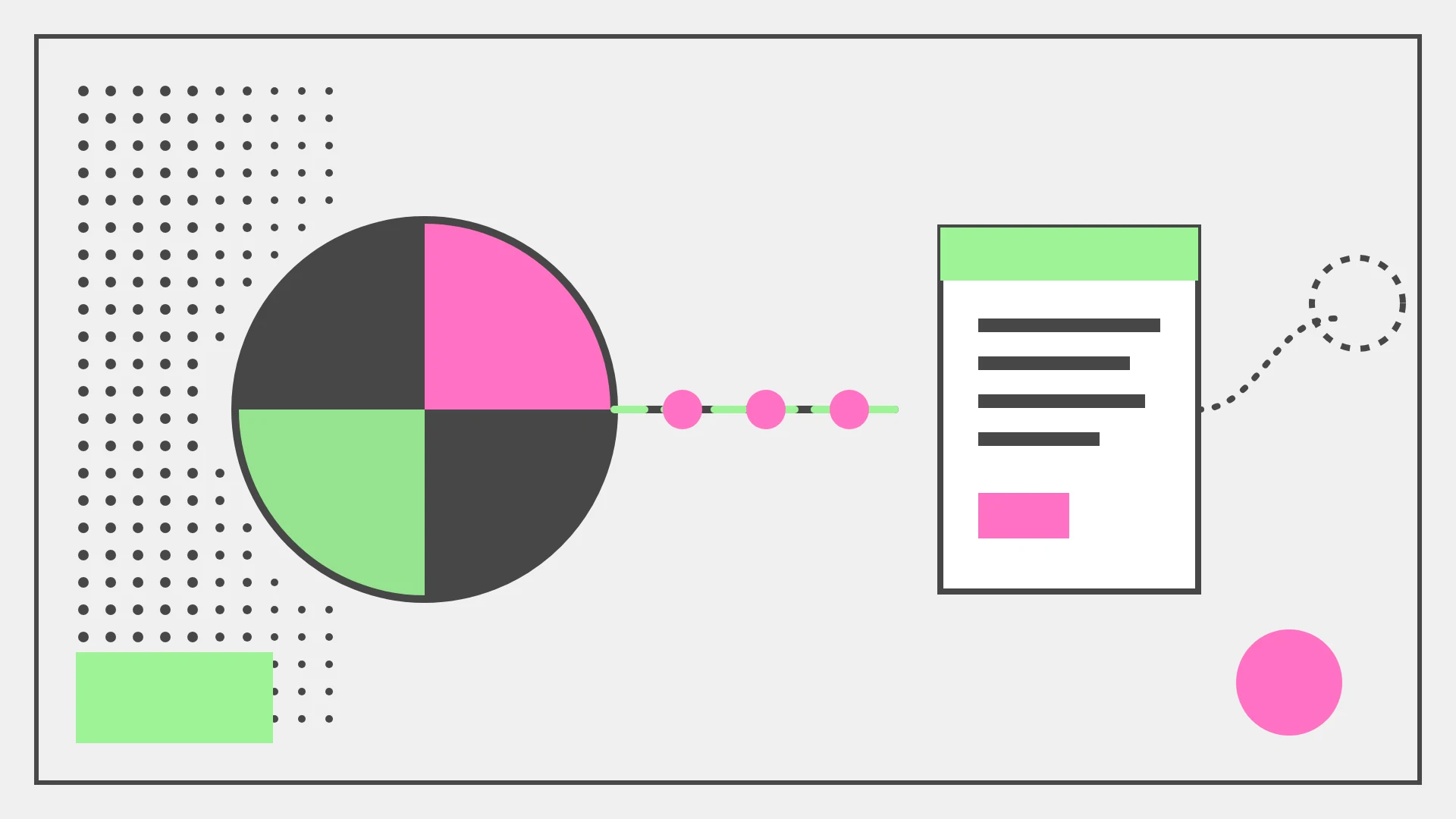
What AI traffic looks like on a small B2B site. In the twelve months to September 2026, 111 of the 1,389 sessions on contentifai.agency arrived from an AI assistant: about one in twelve, or nine a month. ChatGPT sent the most, then Perplexity and Gemini, with a handful from Claude. Around half were engaged sessions. Nobody would build a forecast on nine visits a month, and we don’t. We watch the share.
The word “sessions” is doing careful work in that box, because most of what AI companies do to a website involves no person at all. Cloudflare’s analysis of AI bot activity across its network found that training accounted for nearly 80% of AI crawling by July 2025, with search indexing at about 17% and user-triggered requests at roughly 3% (Cloudflare, 2025). The traffic you can see in analytics is that last, thin category: a person asked a question, the tool fetched or cited your page, and the person clicked. Everything else is machines reading, and that belongs to the crawler conversation rather than this one.
How to track AI traffic: four places to look, in order
Back in 2025 our answer to “can this be tracked?” was yes, with some work, and a prediction that the big platforms would bring it in-house once they had settled the data streams and the privacy questions. They have done exactly that. The setup below uses tools most B2B sites already have, starting with the one that needs no configuration at all.
1. Google Analytics 4: the AI Assistant channel
Since 13 May 2026, GA4 has sorted visits from recognised AI tools into their own channel. Google’s release notes describe a new AI Assistant channel in the default channel group reports, with the medium set to “ai-assistant” automatically (Google, 2026). Open Reports, then Acquisition, then Traffic acquisition, and it sits alongside Organic Search and Referral. Our own site started showing it in June.
There are three things worth knowing before you rely on it. It applies from that date forward only, so your history is not reclassified. It depends on the AI tool passing a referrer, which the mobile apps often strip, so some visits still land in Direct. And smaller or newer tools may not be on Google’s list yet. For anything before May, or for a tool Google has missed, filter the session source for chatgpt.com, perplexity.ai, gemini.google.com, claude.ai and copilot.microsoft.com. A saved exploration takes ten minutes and gives you the back history the new channel lacks.
2. Search Console: the generative AI performance report
Clicks from Google’s AI Overviews and AI Mode arrive in GA4 looking like ordinary Google search visits, so analytics cannot tell you how often Google’s own AI used your pages. Search Console now can, up to a point. The generative AI performance report shows how many times links to your site appeared in AI Overviews and AI Mode, by page, country, device and date, and Google rolled it out to every property worldwide on 31 August 2026 (Google, 2026). You will find it under Performance.
Read the limits before you read the numbers. The report gives impressions only, with no queries, no clicks and no position. An impression means a link to your page was shown inside an AI answer; it says nothing about whether anyone read it or acted on it. Treat it as a presence measure, useful for seeing which pages Google’s AI draws on, and leave it there.
3. Server or CDN logs: which bots, and why they came
Analytics counts people, whereas logs count requests, and the logs are where you see which AI companies are reading your site and why. The major providers publish separate user agents for training crawlers, search-index crawlers and fetches made for a live user, and a CDN such as Cloudflare groups them for you. This is the view that answers “is AI reading my site?” rather than “is AI sending me anyone?”, and a quarterly look is enough. Our AI crawlers post covers the named bots.
4. Ask people: the attribution you control
Every method above depends on a referrer surviving the journey, and many will not. The one source you control is the person. Add “an AI assistant (ChatGPT, Gemini, Perplexity or similar)” as an option to every “how did you hear about us?” field you have: the contact form, the discovery call notes, the onboarding questionnaire. Ask at the first opportunity rather than waiting until someone has become a paying client, because the enquiry that never converts still tells you the channel is working. Over a year this plain question gives you a cleaner picture than any dashboard.
What the numbers can’t tell you
Here is the part the vendors selling “AI visibility scores” tend to skip. With the four sources running, you will know that AI tools read your site and roughly how many people they send. You will still be missing three things, and no tool on the market reliably fills the gap.
What the person asked. Search Console’s AI report holds back the queries, and GA4 never had them. You can see that someone came from ChatGPT; you cannot see whether they asked “best content agencies in the North East” or “is schema markup worth it”, which are very different visits.
What the tool said about you. An impression or a referral tells you a link was shown. It does not tell you whether the answer was accurate, whether you were the recommendation or the fourth name in a list of six, or whether the tool used your page to corroborate a fact in an answer about something unrelated to your services. Being a credible reference is good for you, but it is not the same as being chosen.
What happened next. The jump from “read an AI answer” to “became a client” is the one every marketer wants to measure, and it is still invisible. Appearing in AI search is not the same as being recommended by AI search, and being recommended is not the same as being bought from.
This is why we do not hand clients an ROI formula for AI search. There is not an honest one yet. What we can say is simpler: if your buyers are asking AI tools questions in your category, you will want to be in the answers, and the sensible measure for now is whether your share of that channel is growing month on month.
Want this measured for you each month?
Measure is our monthly AI visibility and web performance report: we review your Google Analytics, Search Console and presence in AI answers, explain what changed in plain English, and give you three prioritised recommendations. From £200 a month on a 28-day rolling agreement.
If you are doing it yourself: the four mistakes to avoid
Plenty of businesses will want to run this in-house, and that is a perfectly good choice when someone has the time to look at the numbers each month. If that is you, the setup above will take an afternoon. The harder part is reading the results without fooling yourself, and over the past year we have watched the same four mistakes make AI traffic look bigger, or smaller, than it is.
- Counting crawler hits as visitors. Server logs record every request a bot makes, so a single training crawl can look like hundreds of “AI visits” if it is added to the analytics total.
- Reading Search Console AI impressions as clicks. The report contains no clicks, so an impression count is a presence figure and nothing more.
- Waiting until the channel is big enough to matter before tracking it. Leave it until then and you will have no baseline to compare against when it does matter.
- Relying on GA4 alone. The referrer is the most fragile link in the chain, and a form field would have caught what analytics dropped.
Avoid those four and the numbers you collect will be modest but trustworthy, which is the right footing for a channel still finding its size.
What to put in your own monthly report
Once the tracking is in place, the question becomes what to look at each month. Our advice is to keep it to five lines, whether that report is something you write for yourself or something you ask an agency to produce for you.
- Share of sessions from the AI Assistant channel, and whether it is rising or falling.
- Engaged-session rate for that channel against organic, because a small channel that engages well is worth more than its size suggests.
- AI impressions by page in Search Console, to see which content Google’s AI is drawing on.
- The count of “AI assistant” answers on your forms, your one source that does not depend on a referrer.
- The pages AI tools are citing, which tells you what to write more of.
That last line is where measurement connects back to the work. Tracking is the easy part now that Google has built most of it. What earns the citations is still the content: specific, useful, written so a machine can quote it, on a site the crawlers can read. Measurement tells you whether that work is paying off, and it cannot do the work for you.
A moving target, and a conversation if you want one
What you have just read is the state of AI traffic tracking as we see it in autumn 2026: four sources, three blind spots, and a share worth watching rather than a number worth forecasting. The tools are changing quickly, and by the time you read this some of the detail may have moved again, so treat the method as the durable part and the menu paths as the bit to check.
If you would like help with any of it, whether that is writing the content that earns the citations, measuring what the AI tools are doing with your site each month, or a complimentary AI readiness check to see where you stand today, get in touch and we will talk it through.
Frequently asked questions about tracking AI traffic
The questions owners and marketing managers ask us most about measuring AI search.
How do I see AI traffic in Google Analytics 4?
Open Reports, then Acquisition, then Traffic acquisition, and look for the AI Assistant channel. GA4 has assigned it automatically since 13 May 2026 for recognised tools such as ChatGPT, Gemini and Claude. For earlier data, filter the session source for chatgpt.com, perplexity.ai, gemini.google.com and claude.ai.
Does Search Console show AI Overviews and AI Mode traffic?
It shows part of the picture. The generative AI performance report, available to all sites since 31 August 2026, shows how often links to your pages appeared in AI Overviews and AI Mode, by page, country, device and date. It does not show queries, clicks or position.
Why does my AI traffic look small?
For most sites it is small. The large majority of AI activity on a website is crawling for training or indexing rather than people visiting, and sessions that begin in an AI tool are usually a small share of the total, growing from a low base. Track the share and its direction rather than the raw number.
Can I tell what people asked the AI before visiting my site?
Neither GA4 nor Search Console passes the question through. The closest substitutes are long, question-shaped queries in your standard Search Console report, the questions prospects raise on calls, and a “how did you hear about us?” field with an AI option.
Is there an ROI formula for AI search traffic?
There is no honest one yet. You can measure sessions, engagement and self-reported attribution, but not what the tool said about you or what the person did after reading it. The practical measure for now is whether your share of the channel is growing and whether the people it sends engage and enquire.
What is the difference between an AI crawler visit and AI traffic?
A crawler visit is a machine fetching your pages to train a model or build an index; it shows in server logs and never in analytics. AI traffic is a person who asked an AI tool a question and clicked through to your site; it shows in GA4 as a session with an AI referrer. The first vastly outnumbers the second.